Related: Why Drawer Slides Matter More Than the Box They Live In
Every garage I have ever walked into has the same problem, and it is not a shortage of storage. It is storage that makes putting a tool away harder than dropping it on the bench. A garage tool organizer earns its wall space the day the hook is closer than the pile, and not one day before.
I have been a diesel mechanic for 16 years. My home shop started as one toolbox and now runs three boxes, a wall of hangers, and a bench I am not going to describe in public. I have organized storage for coworkers, for friends who bought a starter set and panicked, and for one apprentice who lost three 10mm sockets in a single week. The lesson from all of it is the same: vertical space is the cheapest storage you own, and small parts need a home of their own or they will colonize every flat surface you have.
This guide covers four pieces that solve different halves of that problem. A rolling cart for the tools you touch every day. A long wall rack for anything with a handle. A smaller rack for the odd corner. And a cantilever box for hardware, because a coffee can full of nuts and bolts is not a storage system, it is a rumor.
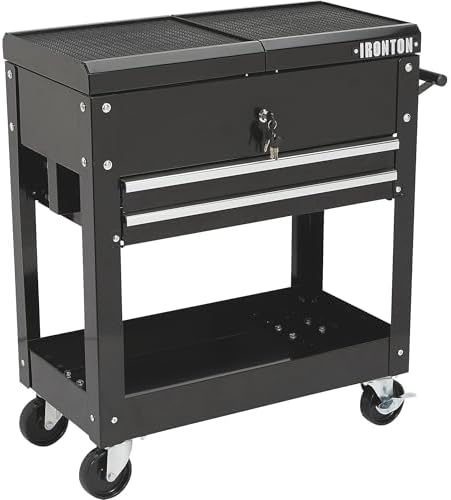
Best Overall: Ironton 28in. 2-Drawer Rolling Tool Cart
If you only buy one thing off this list, make it the thing with wheels. The Ironton 28in. 2-Drawer Rolling Tool Cart is a mobile base for the tools that never make it back to a shelf: the impact, the wrenches you actually use, the tape, the gloves, the half empty can of brake cleaner. Two locking drawers, casters underneath, and a 350 lb rating on the listing.
Here is the argument for mobile storage, and it is the same argument I make to every friend who buys a stationary chest first. A stationary box organizes the tools you are done with. A rolling cart organizes the tools you are using right now, which is the pile that actually causes the mess. If the cart can follow you to the job, the tools stop getting abandoned on the floor.
The locking drawers matter more than people give them credit for. In a home shop, locks are mostly about keeping a curious kid out of a drawer full of sharp things. In a shared shop, they are about your tools still being there Monday morning. Either way, a drawer that latches is a drawer that stays shut when you roll the cart across a rough slab, and that alone keeps your sockets where you left them.
Casters are non-negotiable on anything loaded. Look for wheels that roll on a floor with grit on it and lock on all four corners, not the single wheel brake that turns a cart into a tripod. Treat any weight rating as a starting point, spread the load low, and keep the heaviest drawer at the bottom.
Best Wall System: TVKB 68'' All Metal Garden Tool Organizer
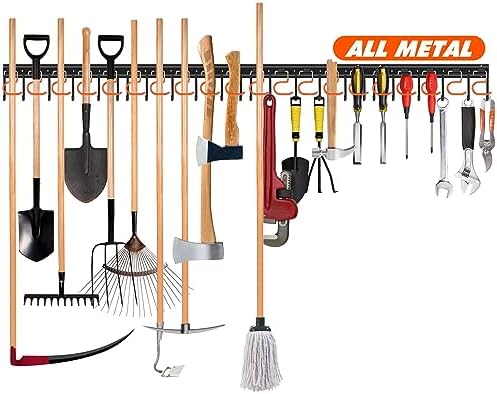
This is the piece that takes your garage back. The TVKB 68 inch All Metal Garden Tool Organizer is an adjustable wall mount rack with heavy duty hooks, built for long handled tools. Shovels, rakes, brooms, the snow shovel, the extension cord, the hose reel you keep meaning to mount. Anything that currently leans in a corner and falls over when you reach past it.
All metal construction is the reason this one gets the wall slot instead of a plastic rack. Plastic hooks in a cold garage get brittle, and brittle hooks let go in February when you grab a snow shovel with one hand and a coffee in the other. Metal hooks anchored into a stud will outlast the wall they are bolted to.
Adjustable hooks are the feature I care about most, and it is a feature most racks skip. Handle diameters are not standardized. A broom handle, a fiberglass shovel shaft, and a leaf rake are three different thicknesses, and a fixed hook pattern means two of them hang wrong. Adjustable means you set the spacing for your tools instead of the other way around.
Mounting advice: find the studs first, always. A 68 inch rack spans enough wall that you can almost always catch two studs, and two studs with good lag bolts will hold more than the rack will. If you are going into drywall or block, use the right anchors and keep the heavy items near a stud anyway. Hang long tools with the handles consistently up or consistently down, because a wall that reads as a system is a wall people actually use.
Best Budget Wall Rack: keomaisyto Garden Tool Organizer with Large Hooks
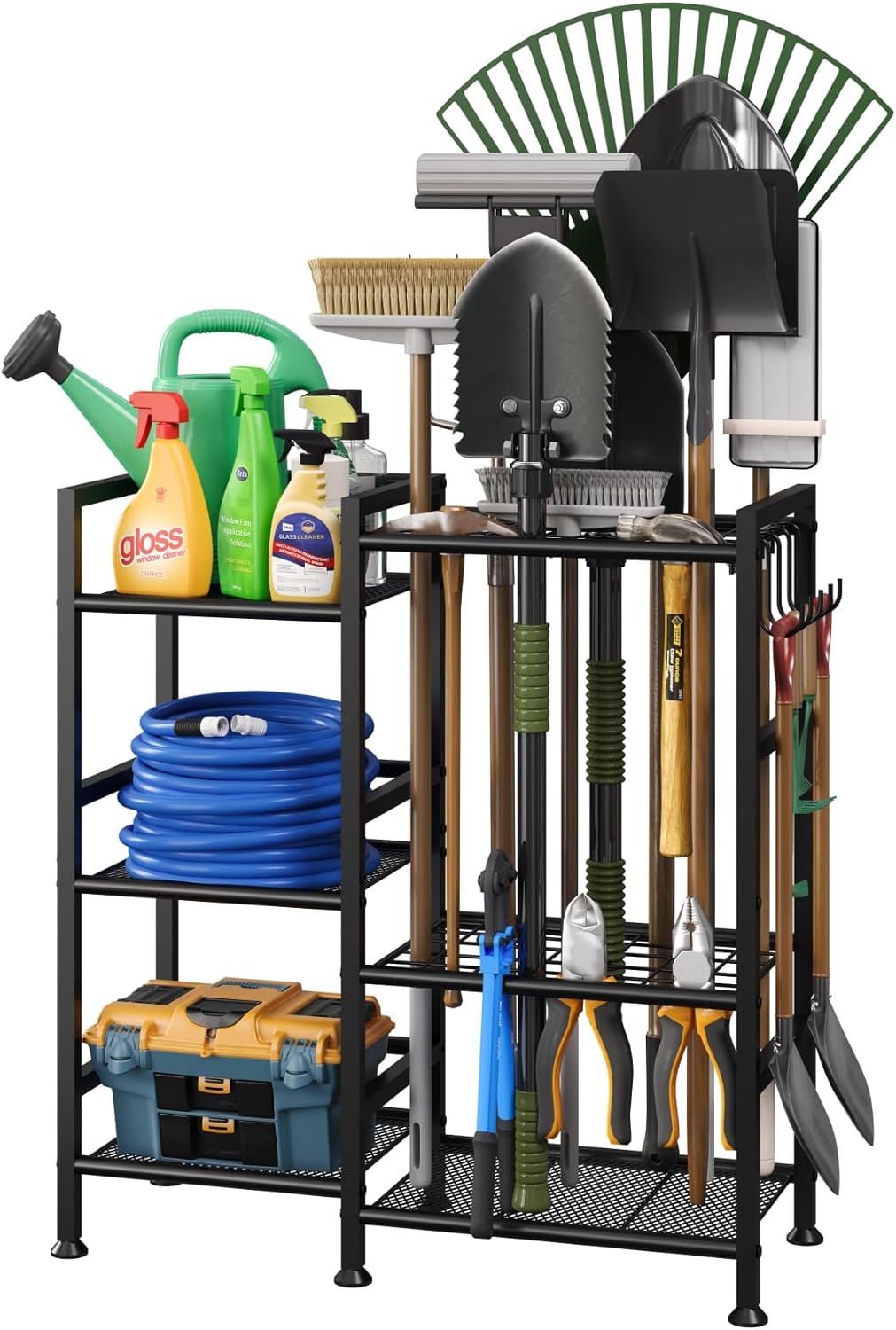
Not every wall needs 68 inches. The keomaisyto Garden Tool Organizer with Large Hooks is the smaller, cheaper wall rack for the corner, the shed, or the section of garage where you keep the stuff that only comes out twice a year.
Large hooks are the whole point here. Small hooks on a cheap rack are for screwdrivers and not much else. Large hooks take a coiled hose, a trimmer, a ladder, a folding chair, the kind of bulky odd shaped item that defeats a pegboard. That is what makes this rack useful rather than decorative.
If you are setting up a shed from scratch, this is the one I would start with, because it clears the floor in an afternoon and then you can see what you actually own. Add the longer rack later, once you know what really lives on the wall. Storage decisions made after you have lived with the mess for a month are better than storage decisions made in the aisle of a store.
Best Portable Box: Olympia Tools 18 Inch Cantilever Tool Box Organizer
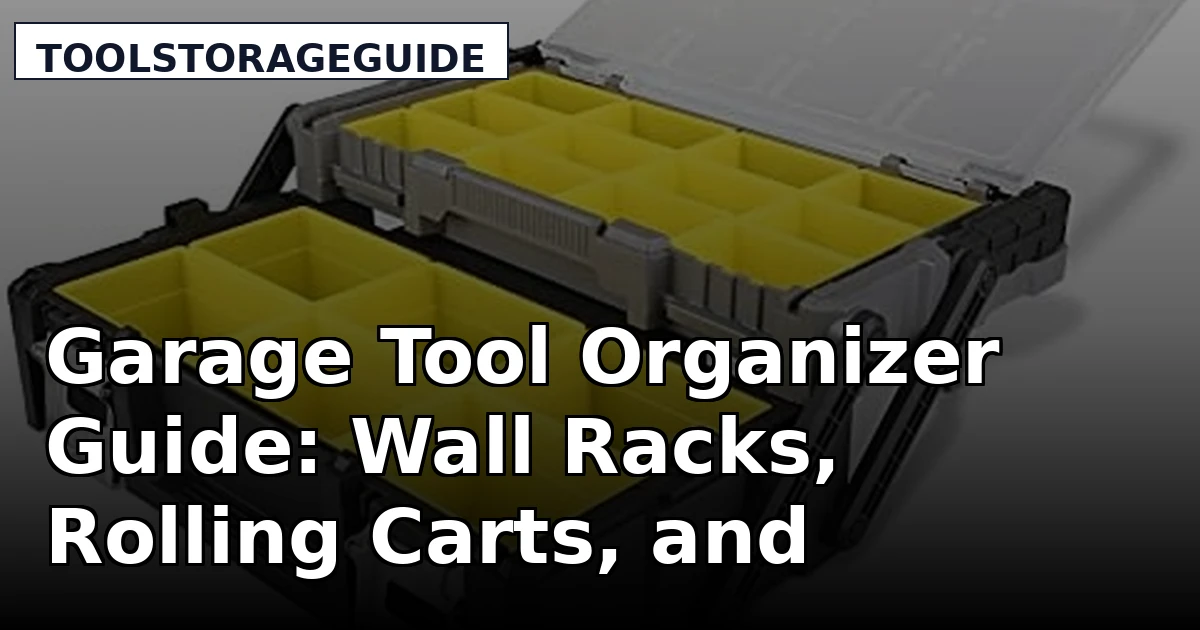
Cantilever boxes are the sleeper pick on this whole list, and I will argue about it. The Olympia Tools 18 Inch Portable Plastic Cantilever Tool Box Organizer opens in tiers, which means every tray is visible at once instead of stacked in a dark box you have to dig through. Removable compartments let you pull one tray out and carry it to the job.
This is the answer to the coffee can problem. The listing puts it plainly: hardware, assorted nails, dowels, washers, screws, nuts and bolts. That is the category of stuff that has no home in most garages, so it ends up in a bucket, and then you buy a box of screws because you cannot find the box of screws you already own. I have done it. Everybody has done it.
Removable compartments are what separate a cantilever box from a regular toolbox with a tray on top. You can build a tray for washers, a tray for bolts by size, a tray for the electrical bits, and pull the one you need without dumping the rest. The tiers also mean the box takes a small footprint on a shelf while holding a genuinely silly amount of small hardware.
One honest note: this is a plastic box, and plastic boxes are for parts, not for a thirty pound wrench collection. Treat it as a hardware organizer that happens to be portable and it will serve you for years.
How I judge garage tool storage
The checklist is short and it has not changed in a decade.
Does putting the tool away take less effort than leaving it out? This is the only question that matters long term. If the hook is across the garage, the tool lives on the bench. If the hook is where you already stand when you finish the job, the tool goes home.
Is the steel thick enough to resist flex? Gauge steel is how thick the sheet metal is, and you can feel it in the lid flex or the way a rack carries a load without bowing. Thin racks that flex under a shovel are a temporary solution with a permanent look.
Do the moving parts survive abuse? Drawer slides are the soul of any box with drawers. Ball bearing slides or nothing. Friction slides are the reason people are pulling drawers with both hands in year two.
Do the casters roll and lock? On anything loaded, a wheel that does not lock turns a cart into a hazard, and a wheel that does not roll means you are lifting the cart instead of moving it.
Would I put my own tools in it? That is the last filter, and it kills a lot of products.
What the four picks do together
The mistake people make is buying one big box and calling the garage organized. A garage is not one problem. It is four or five different problems wearing the same coat of dust.
Long handled tools need vertical space. That is the TVKB rack, or the keomaisyto rack if the wall is short.
Daily drivers need to travel. That is the Ironton cart, with its locking drawers and casters, parked where you actually work.
Small hardware needs compartments. That is the Olympia cantilever box, with removable trays so a bolt hunt does not become a bin dump.
Measure before you buy. A 68 inch rack on a 60 inch wall is a bad afternoon. A cart needs aisle space to roll, plus a few inches to open a drawer without hitting the bench. Walk your garage with a tape measure and mark the wall with painter's tape before you drill anything. It looks ridiculous for an hour and saves you a wall full of holes.
Mount to studs. Anchor the rack above the height of your tallest kid and below the height you can reach without a stool. Heavy on the bottom, light on top, and nothing that swings over a doorway.
Then leave a hook empty on purpose. Every wall system needs slack, because the tool you buy next month has to have somewhere to go, or the whole thing collapses back into a pile.
The garage tool storage reference table
This is the short version, the one I would tape inside a cabinet door. Prices move, so check the listing rather than trusting a number somebody wrote down months ago.
| Product | Type | Best for | Mounting | Price |
|---|---|---|---|---|
 Visit on Amazon → Visit on Amazon →Ironton 28in. 2-Drawer Rolling Tool Cart |
Rolling cart | The tools you use right now | Casters, locking drawers | $153.70 |
 Visit on Amazon → Visit on Amazon →TVKB 68'' All Metal Garden Tool Organizer |
Wall rack | Long-handled tools | Studs and lag bolts | $29.99 |
 Visit on Amazon → Visit on Amazon →keomaisyto Garden Tool Organizer with Large Hooks |
Budget wall rack | Coiled hoses, ladders, bulky items | Wall anchors | $45.99 |
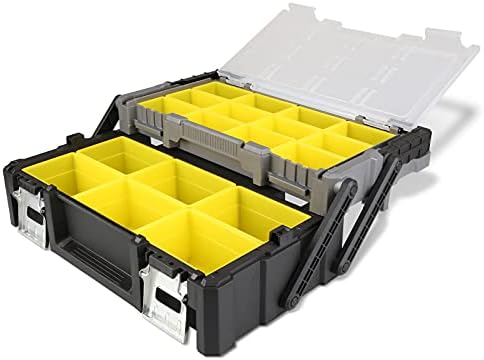 Visit on Amazon → Visit on Amazon →Olympia Tools 18 Inch Cantilever Tool Box Organizer |
Portable box | Small hardware and fasteners | Shelf or bench | $41.99 |