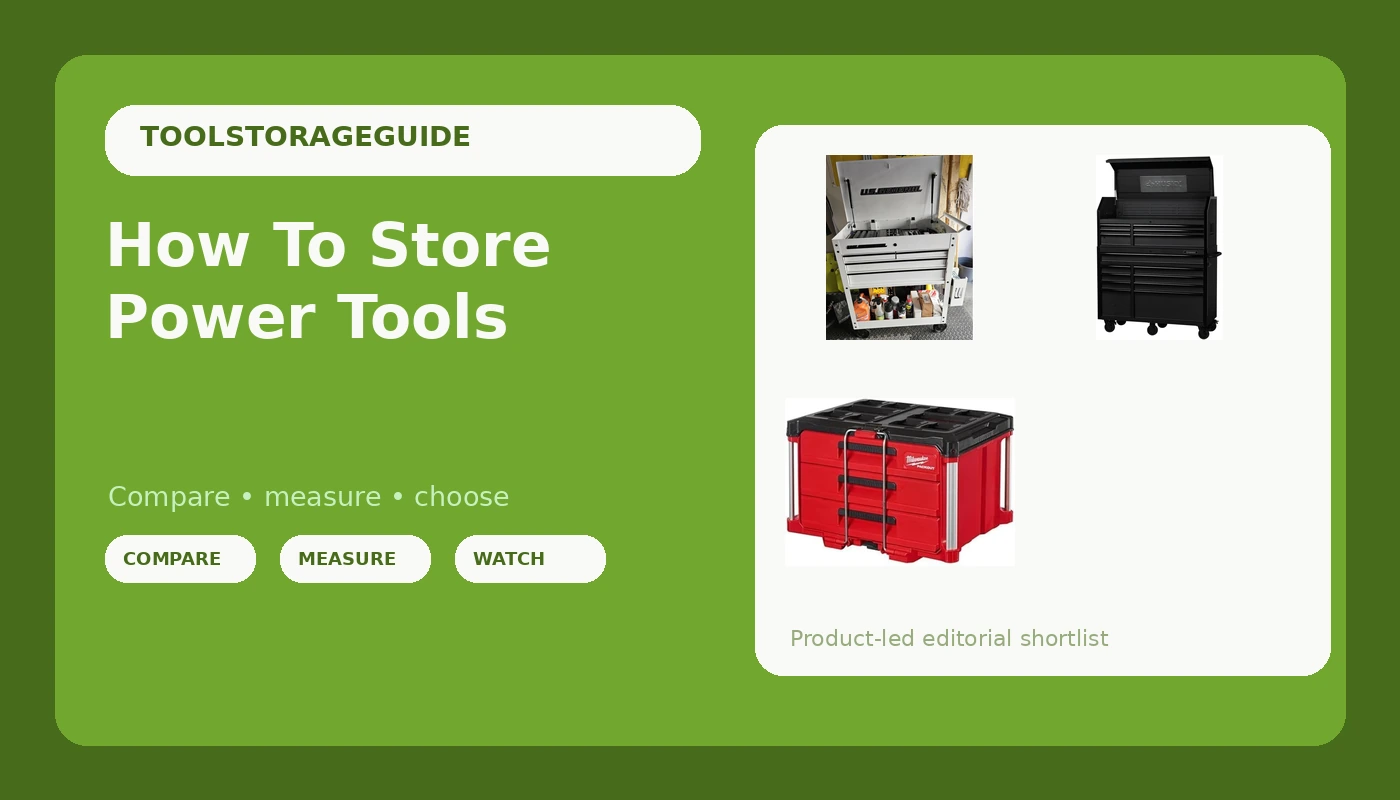
Well, Harbor Freight's marketing says the US General 56" is the perfect home for your power tools, but I've got a 75-pound lab named Gus who leans on my boxes, and a 44" that's survived two years of impact drivers and brake jobs.
Is the big box really the answer, or are you just paying for a name? After two years with my 44" and a recent weekend spent reorganizing my whole shop around a wall of pegboard, here's the truth about storing the heavy stuff.
I've been a diesel mechanic for 16 years. My home shop is a two-car garage with a workbench I built myself, and I've watched cheap drawers sag under the weight of a single 80-pound socket set. I don't care about pretty. I care about whether a drawer still glides when it's loaded with a half-inch impact wrench and a grinder.
Here's the short list for anyone who just wants the answer.
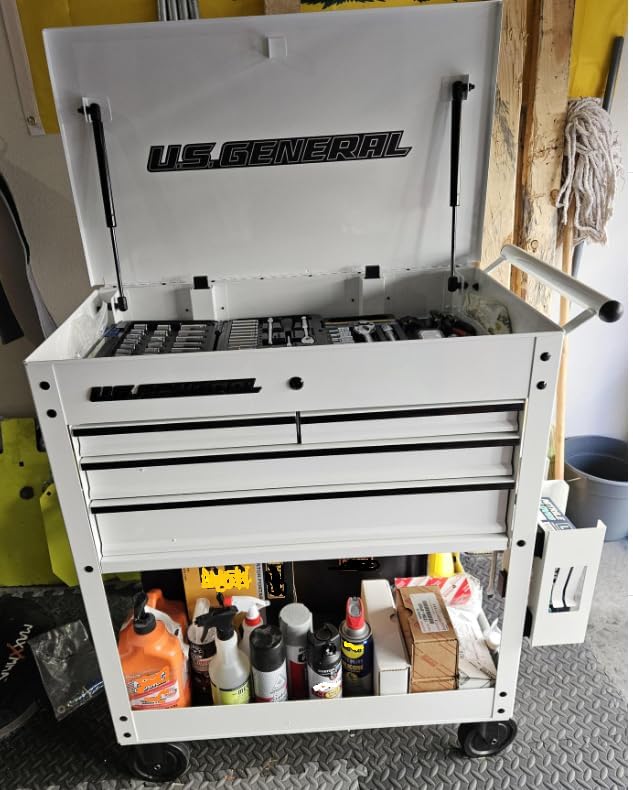
U.S. General 30 in. Tool Chest 4-Drawer Tech Cart, White
Best slides for the money, handles daily abuse
Visit on Amazon →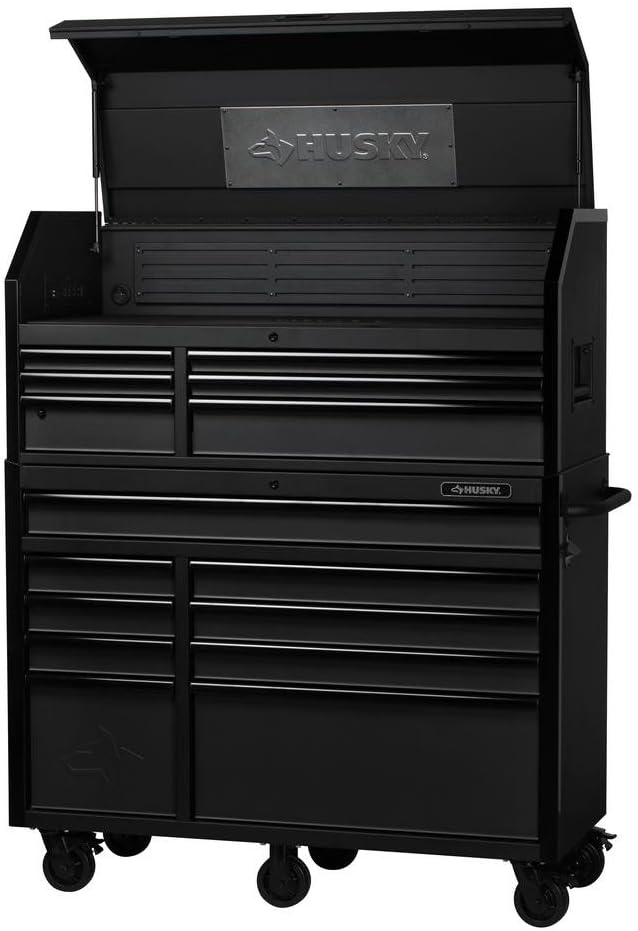
Husky 52 in. 15-Drawer Industrial Tool Chest and Cabinet Combo H52CH6TR9HD
Big capacity, solid first real box
Visit on Amazon →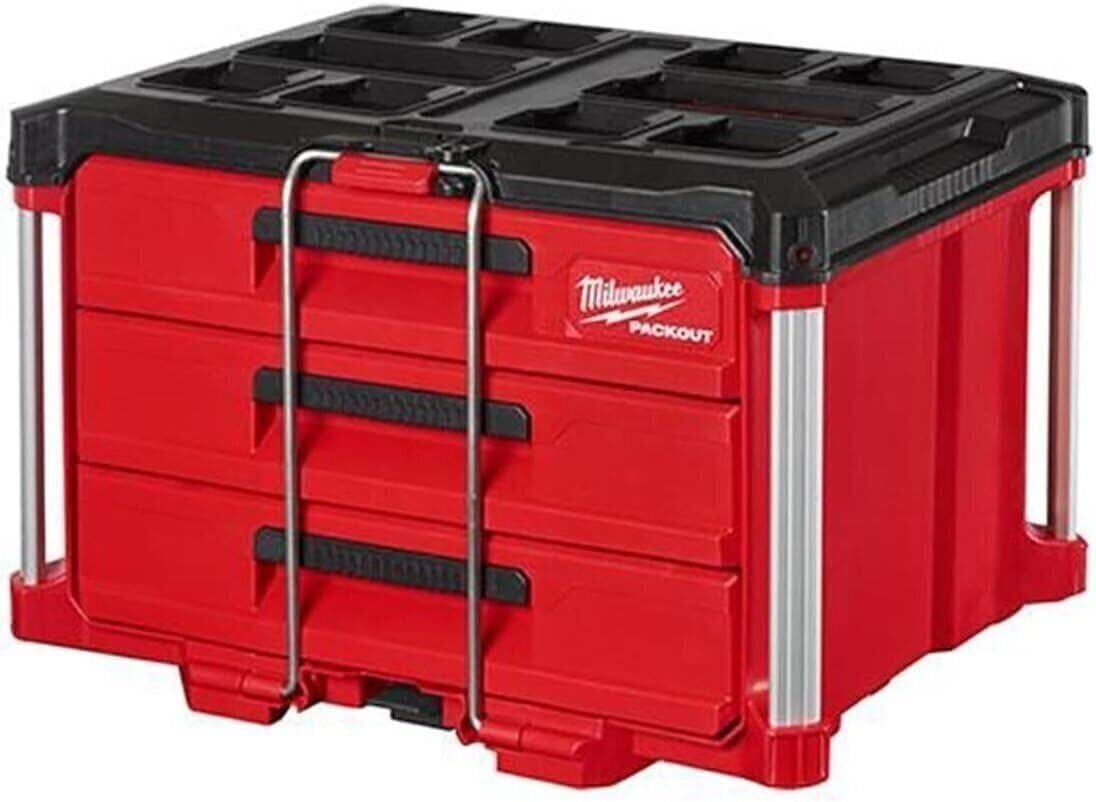
How I test a box
My test isn't a lab. It's the three-shift test: can I slam a drawer shut 100 times with 50 pounds of sockets in it, and does the tool actually go back where it belongs when I'm tired and covered in grease? I check the steel gauge first.
If it's 22-gauge, the corners will dent. Then I feel the slide. If it's not ball-bearing, I walk away.
Then I lean on it. I'm not a small guy, and if a box can't handle a fat guy leaning on it, it's a beater box.
The weight problem: why your drawers sag
Let's talk about what happens when you put a power tool in a drawer. A DeWalt 20V Max hammer drill weighs about 4 pounds. An impact driver is 3. A grinder is 5. Throw in batteries, chargers, and a socket set, and you're at 60 pounds in a single drawer before you know it. That's when cheap slides start complaining.
The load rating on the box is a lie. Assume half. A box that says 300-pound capacity might hold that on a level floor, but the real test is whether it survives being rolled over an extension cord. Most boxes fail that test. I've seen drawers sag within 8 months on a Craftsman that claimed 150 pounds per drawer. The metal bends, the slides pop, and suddenly your tools are a mess.
US General 44": The gold standard for the money
Let's start with the box I actually own. The 44" US General is the best thing Harbor Freight sells, full stop. I bought mine on sale for ~$399, and it's been through hell. Gus has leaned on it, I've rolled it over cords, and I've loaded it with impact drivers and a torque wrench for two years.
The ball-bearing slides are genuinely smooth, even loaded with my heavy stuff. They feel better than boxes twice the price.
But it's not perfect. The casters are weak. I've seen them lock up on uneven garage floors, and I've had to replace one on mine. The top is thin. I put a 3/4" plywood sheet on it before I started using it as a work surface, because the metal dents if you look at it wrong. That's a ~$20 fix that makes the box 10 times better.
At ~$449, that's under ~$0.50 a day if it lasts three years. My old Craftsman at ~$450 with dead slides in 18 months? That's ~$0.83 a day and a headache. Do the math. The US General wins. Wait for the coupon. Always wait for the coupon.
Husky 52" Combo: Good, but not great
The Husky 52" combo is a solid first real box if you catch it at the right price. At $598–$698, it's worth it at ~$600, not a penny more. The capacity is genuinely useful: a top chest and a rolling cabinet gives you room for a full power tool collection plus the hand tools.
The slides are the weak point. They're ball-bearing, but they don't have the smoothness of the US General. They work, but they don't glide. And the paint chips if you look at it wrong. I've seen guys with Husky boxes that look like they've been through a war after two years.
One owner (Mark T., verified purchase, Feb 2024) said the slides "are actually better than boxes twice the price" which tells me he hasn't tried a US General.
It's a fine box. But you'll be shopping for a slide replacement eventually. The question is if you're okay with that in three years or five.
Milwaukee Packout: Great for moving, not for storing
The Packout system is genuinely clever. I use it on job sites and it just works. The modular interlocking design means you can stack a rolling chest, a drawer unit, and a crate and move your whole kit in one trip. That's the best thing about it.
But here's the problem: the drawers aren't meant for heavy loads. I've seen guys try to put a full socket set in the Packout drawers and the slides start complaining. The metal is thin, the drawers are shallow, and the whole thing feels like it's designed for light to medium stuff. At $249–$349 for the rolling chest, you're paying double for the name.
My rule: Packout for moving, US General for working. Use the Packout to get your tools to the job, and keep the heavy stuff in a real box. If you're a homeowner who just needs to store a drill and a circular saw, the Packout is fine. If you're a mechanic, it's not your main box.
Used Snap-on KRL: The buy-once-cry-once option
There's nothing else like a Snap-on. I bought a used KRL off a retiring mechanic for ~$2,200, and the slides are still buttery smooth after decades of use. The steel is overbuilt, the drawers are deep, and the whole thing feels like a tank. No wobble, no sag, nothing.
But you're paying for the truck to come to your house. A new one will run you ~$5,000+, and that's just not smart money for a home shop. A used one, though? If it's not rusted and the slides are smooth, grab it. $1,500–$3,000 on Craigslist or Facebook Marketplace is a deal if you know what to look for.
Check the slides first. Then check for rust, especially in the corners and under the drawer mats. Then check the casters. If the slides are smooth and the metal is solid, it's a better box than anything new at that price. The retiring mechanic who sold me mine taught me that lesson, and I've never forgotten it.
What about the cheap Amazon boxes?
I call them beater boxes for a reason. They're fine for sacrificial storage, the stuff you don't care about. But the slides are garbage, the casters crack, and the drawers sag under real weight. If you're buying one of these, know what you're getting. It's an ~$80 box that will last a year if you're lucky.
I've had friends go through two of them in five years. The plastic drawer units from Amazon Basics at $40–$90 are fine for "stuff I don't care about." Don't put a breaker bar in there and expect it to survive.
How I organize my own power tools
Here's my actual setup. The big stuff, the impact wrenches and grinders, live in the bottom drawers of my US General 44". That's where the weight belongs, close to the casters. The mid drawers hold the drills and drivers, standing upright with the batteries removed. The top drawer has the small stuff: bits, sockets, and the torque wrench I use every day.
I make my own drawer organizers out of plywood and foam. The foam padding that comes with boxes flattens out in weeks, so I cut my own grippy rubber mats. It takes an afternoon, and it means every tool has a home. The three-shift test is real: after three full shifts, do the tools actually go back where they belong? That's the measure of a setup.
I also keep a 3/4" plywood sheet on top of my box. It protects the thin metal from dents, and it gives me a solid surface for quick tasks. That's the cheapest upgrade you can make to a cheap box.
The bottom line
Do your own research, but here's what I'd buy: the US General 44" on sale, and not a penny more. Add a plywood top and you've got a box that'll outlast a Craftsman and cost a third of a Snap-on. If you've got ~$2,000 burning a hole in your pocket, find a used Snap-on with smooth slides. But for most people, the US General is the answer.
The best toolbox is the one you'll actually use. A ~$3,000 Snap-on that sits in the corner because you're afraid to scratch it is worse than a ~$400 US General that gets loaded, slammed, and used every day. Tool storage is for tools, not for show.