Garage tool storage organizer decisions usually start in the wrong place. Most people shop by size first and discover later that the box big enough for everything is also too heavy to roll across a garage floor, or that the wall space they ignored was the answer the whole time. The four products below cover four genuinely different approaches to keeping tools reachable: a wall-mounted power tool rack that also charges batteries, a rolling chest, a small steel carry case, and a slide-out truck bed tray for people who work out of a pickup. None of them replaces the others. Each one solves a different problem, and the point of this guide is to explain what each format does well, where each one falls short, and how to decide which belongs in your garage.
Related: Ball Bearing vs Friction Drawer Slides: What Actually Lasts →
Quick answer
There is no single best format, only the format that matches where your tools live and where you use them. If your cordless tools pile up on a bench, a wall-mounted rack puts them at eye level and keeps batteries charging in one place. If you need everything in one movable container, a rolling chest is the answer. If you carry a small set of hand tools between jobs, a portable steel case wins. If your truck is your shop, a slide-out bed tray keeps cargo reachable without crawling into the bed. Match the format to the workflow first, then compare construction. Do not label any of these the strongest or the most durable without evidence to back it up.
Four useful options
| Model | Best fit | What stands out |
|---|---|---|
| POKIPO Large Power Tool Organizer Wall Mount with Charging Station | Cordless tools and batteries that live on a wall | Four-layer steel rack, eight drill holders, integrated power strip, manufacturer-stated 600 lb load |
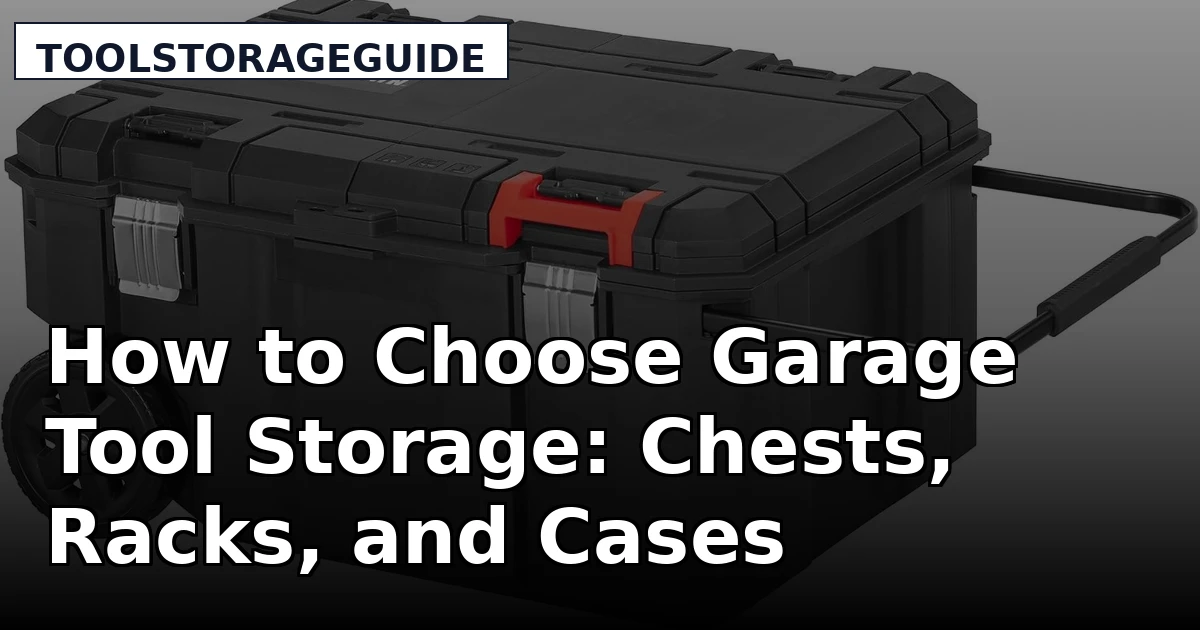
| CRAFTSMAN VERSASTACK 30 Gallon Quick-Access Rolling Tool Chest (CMST17870) | Tools that need to move around the shop | 30 gallon capacity, rolling design, part of a stackable modular family |
| Geinxurn 11” Red Tools Box, Portable Steel Heavy-duty Tool Case | Hand tools that travel | Steel body, safety latch, carry handle, small footprint |
| S2 Series Slide-Out Truck Bed Organizer Aluminum Tray | Pickup owners who work out of the bed | Two aluminum trays, slide-out access, no-drill installation for mid-size beds 5 ft and longer |
Wall-mounted power tool rack: POKIPO Large Power Tool Organizer Wall Mount with Charging Station
The wall rack is the format that fixes the most common garage problem: cordless tools with no home. Once drills live on hooks, they stop migrating to the bench and the floor. The charging strip matters more than it looks. If batteries charge where the tools hang, you stop carrying batteries back and forth, and a dead tool becomes a swap instead of a search.
Two things to plan before buying. First, the rack needs a wall section you are willing to dedicate permanently, and that wall needs to be solid enough to carry a loaded steel rack. Second, the manufacturer's load figure assumes weight spread across the rack rather than concentrated in one holder. Hanging eight heavy tools on the top layer is a different load case than the number suggests. Mount it into framing where you can, and spread the heaviest items across the lower layers.
Rolling chest: CRAFTSMAN VERSASTACK 30 Gallon Quick-Access Rolling Tool Chest (CMST17870)
A rolling chest is the right answer when the tools need to follow the work. Anyone who has carried a loaded box from the bench to the driveway knows the value of casters. The rule that matters here is load discipline. A 30 gallon chest holds a surprising amount of steel, and weight is what kills mobility. Put the heavy items low, keep the top layer light, and roll it rather than dragging it over thresholds, because casters and door tracks are where rolling boxes meet their worst day.
The VERSASTACK family angle is worth understanding before you buy. Modular systems earn their money over time, because you add cases as the tool collection grows instead of buying a bigger chest. If you are already invested in the platform, the rolling chest is the base that the rest of the stack sits on or rolls under. If you are starting fresh, this is a reasonable first container because it works alone and it expands later.
Portable steel case: Geinxurn 11” Red Tools Box
The small steel case is the format people skip and later regret skipping. A rolling chest is not a good way to carry a hammer, a tape, and a set of screwdrivers into the house for a fifteen minute job. A carry case is. It also solves a storage problem inside larger storage: sockets, drill bits, and loose fasteners that would otherwise rattle around the bottom of a big drawer can live in one grab-and-go box.
The trade-off is capacity, and it is a real one. An 11 inch steel case holds a focused set of hand tools, not a full kit. Before buying, list what you expect to carry and measure it. The safety latch is a genuine feature worth noting, because a steel box that pops open when you set it down in a truck bed is worse than no box at all. Read the latch and hinge description carefully, since that is where the durability question always lives on small cases.
Truck bed tray: S2 Series Slide-Out Truck Bed Organizer Aluminum Tray
If the truck is the shop, bed organization is not a luxury. Reaching over a tailgate for a tool at the front of the bed is how people end up climbing in and out twenty times a day. A slide-out tray pulls the load out to you instead, and aluminum keeps the weight penalty low, which matters because every pound of organizer is a pound of payload you cannot use for tools.
Fitment is the whole game with bed organizers. This one is built around mid-size beds 5 feet and longer, so a full-size bed or a short bed will not be the right match. Confirm your truck's bed length and configuration before ordering, because bed accessories are one of the categories where a near fit is the same as no fit. The no-drill installation claim is also worth reading closely in the product documentation, since clamp-style systems depend on bed rail geometry and every truck model differs.
Prices and availability may change. Product images, names, and retailer links must be matched by verified ASIN. Do not state a current price, rating, stock status, or measured result without current evidence.
How load ratings and capacity numbers actually work
A load rating is a specification, not a promise about your setup. When a rack lists a number like 600 lb, that figure comes from a test condition, usually with weight distributed evenly across the structure. Real tools do not distribute evenly. A shelf with eight drills is front-loaded and hanging, which stresses mounting points and the frame differently than a flat, centered load. The number is still useful for comparing products in the same category, but treat it as a ceiling for ideal conditions rather than what you should routinely hang on it.
The same logic applies to volume figures like 30 gallons. Capacity is total internal space, measured before you add dividers, trays, or a socket set that weighs forty pounds. A chest full to the brim with heavy tools is harder to roll and harder on its casters than the same chest with the same volume of light items. Weight, not volume, is what determines whether a mobile box stays mobile.
For steel cases and other small containers, the spec that matters is not printed at all. It is the latch, hinge, and seam quality, which you can only assess from photos, documentation, and the questions you ask before buying. If a listing does not describe the latch, the hinge, or the sheet metal, that is information in itself.
Match the format to where the work happens
The most useful question is not "how many tools do I own" but "where do I reach for them." Storage that sits far from the point of use does not get used, and storage that does not get used becomes a shelf for things you have forgotten.
Three warehouse categories cover most garages. Wall storage holds tools you grab dozens of times a day and keeps them off horizontal surfaces. Mobile storage holds tools that travel, whether across the shop or across town. Container storage holds focused sets that move by hand and keep small parts from scattering.
Once you name the category that is actually failing in your shop, the product decision usually makes itself. Most people who think they need a bigger chest actually need a wall rack. Most people who think they need a wall rack actually need a small case for the tools that leave the garage. Diagnose first, then buy.
A five step way to decide
- List where your tools currently pile up. Benches, floors, truck beds, and the top of the chest are all signals about what is missing.
- Sort the piles into three groups: tools that stay put, tools that move around the shop, and tools that leave the property.
- Match each group to a format. Wall rack for tools that stay, rolling chest for tools that move inside, carry case for tools that travel by hand, bed tray for tools that work from a vehicle.
- Check the physical constraints before ordering: wall construction, floor thresholds and door widths, bed length and rail style, and available footprint.
- Buy one format at a time and live with it for a month before adding the next. Storage that gets used tells you what the next purchase should be.
What to check before you buy
- Read the mounting or installation requirements first. A wall rack needs solid anchoring, and no-drill bed systems depend on your specific bed rails.
- Compare load ratings only within the same format. A rack rating and a chest rating measure different things.
- Confirm fitment numbers against your own measurements, especially for vehicle accessories where near fits do not work.
- Look for the latch and hinge description on any portable case. That is where small steel boxes show their real quality.
- Think about expansion. Modular systems cost more up front and less over five years, because you add pieces instead of replacing the whole kit.
- Plan for the heaviest single item you own, not the average one. It sets the requirement everything else has to meet.
Which option should you choose?
Choose the POKIPO Large Power Tool Organizer Wall Mount with Charging Station when your cordless tools and batteries have taken over the bench and you have wall space to reclaim. Choose the CRAFTSMAN VERSASTACK 30 Gallon Quick-Access Rolling Tool Chest (CMST17870) when tools need to move around the shop and you want a base that can grow into a stackable system. Choose the Geinxurn 11” Red Tools Box when you need a small steel case for hand tools that leave the garage with you. Choose the S2 Series Slide-Out Truck Bed Organizer Aluminum Tray when your pickup bed doubles as a workbench and you are tired of climbing in to reach your gear.
Two caveats on the evidence. First, load ratings and installation claims above come from the manufacturers, and the conditions behind those numbers are not published here. Second, no format is universally better than the others. A wall rack fails the person who works from a truck, and a bed tray is useless to someone with a sedan. Judge each product against your own workflow and the constraints of your space.
The bottom line
Garage tool storage organizer purchases go wrong when people shop for capacity instead of workflow. Decide where your tools are used, pick the format that serves that location, and check the physical constraints before you order anything. The wall rack solves bench clutter and charging. The rolling chest solves mobility and modular growth. The steel case solves portability. The bed tray solves vehicle access. Any one of them is a real improvement over a pile, and the right one is the one that matches the way you actually work.