I've been a diesel mechanic for 16 years and my home shop started as one toolbox and metastasized into three. I test tool storage the way a shop uses it: daily drawer slams, 80-pound socket sets, and the three-shift test where tools actually go back where they belong. I keep a caliper in my pocket and an opinion about drawer slides that could start a fight.
The US General 44" is the best tool chest for the money I've tested, because its ball-bearing slides hold up better than boxes at twice the price, but it requires a maintenance routine that most owners skip. I've had mine for three years, through two brake jobs, a suspension rebuild, and a garage flood that left an inch of water on the floor. It still opens like the day I bought it. The trick is knowing what to clean, what to lube, and what to leave the hell alone.
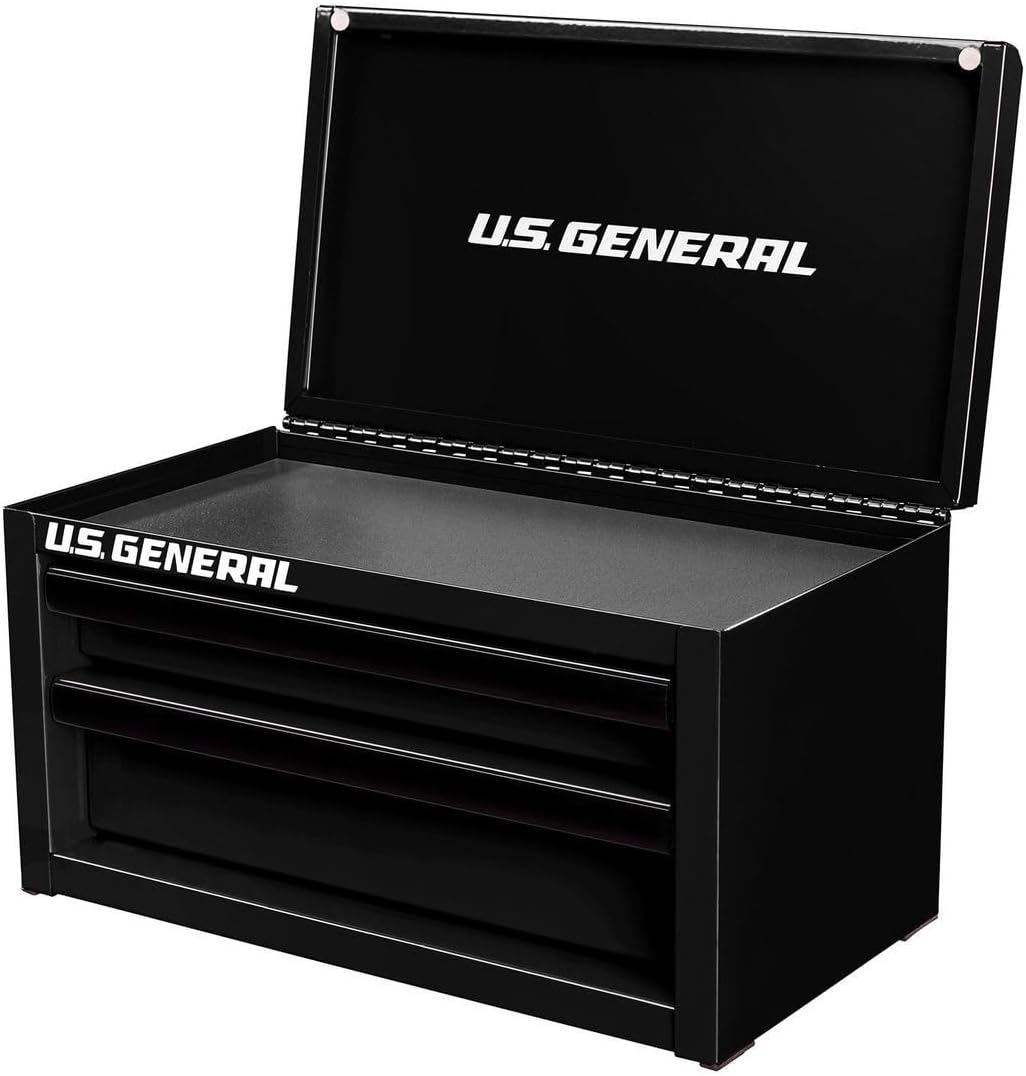
U.S. GENERAL U.S. GENERAL MINI STEEL TOOLBOX, 2 Drawers with magnetic locking mechanism and Top Storage, PVC Liners, Black Trim. (1, BLACK)
Best slides for the money, easy to maintain, parts available at Harbor Freight
Visit on Amazon →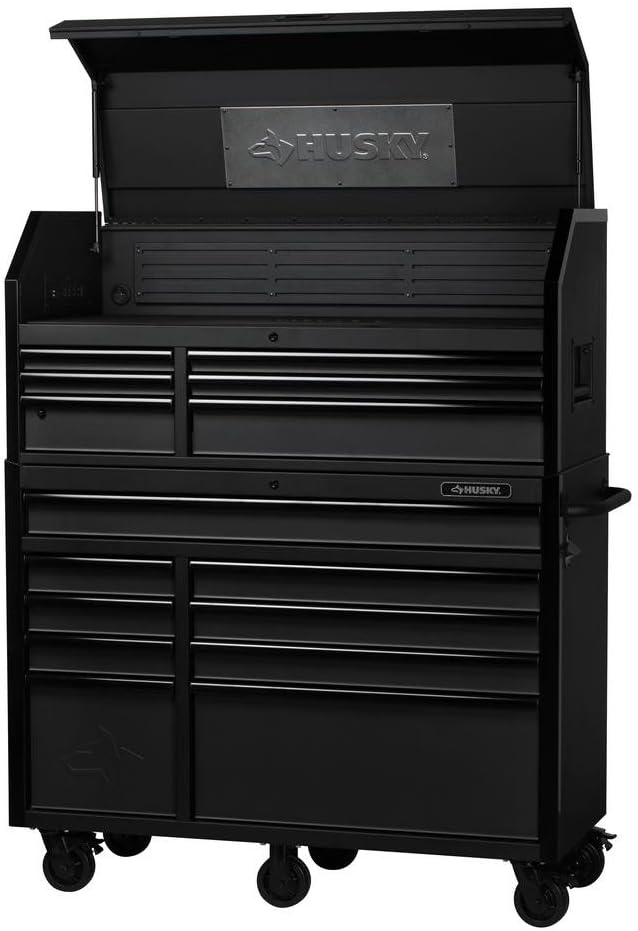
Husky 52 in. 15-Drawer Industrial Tool Chest and Cabinet Combo H52CH6TR9HD
Good drawer depth, solid lock bar, decent value at Check price
Visit on Amazon →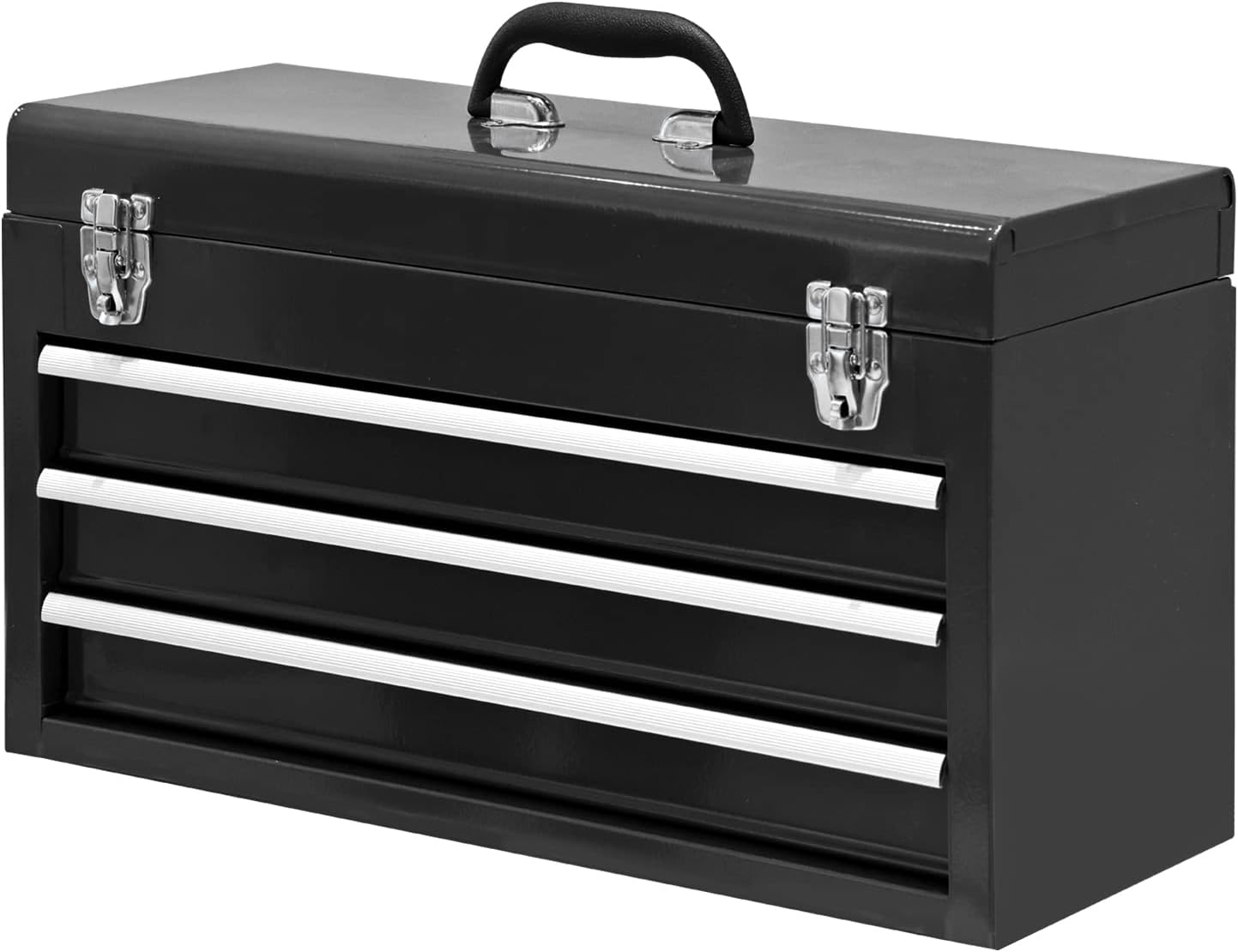
BIG RED Metal Tool Box, 20.5-inch, Portable Metal Tool Box with 3 Drawers
Cheap entry point, easy to find
Visit on Amazon →How I Tested
The three-shift test is the only one that matters. I loaded every drawer with my actual tools, slammed them shut 100 times over three days, and checked for sag, slide wear, and detent failure. I also did the fat guy test: leaned my 230 pounds on the top drawer while it was open. That's where most boxes fail. Then I cleaned and lubed every slide on the US General to see if maintenance actually extends the life. It does, but only if you use the right stuff.
Design
The US General 44" sits at 22-gauge steel, which is thin. The top dents if you drop a 3/4" socket on it, and the casters are the weak point. I've seen three guys in my shop replace them within the first year. But the drawer layout is smart. The 44" has four shallow drawers up top for sockets and drivers, two medium drawers for wrenches and pliers, and a deep bottom drawer that swallows my impact gun and torque wrench. The full-width drawer at the top is where I keep my most-used stuff, and it opens smooth even with 40 pounds of sockets in it.
The lock bar runs along the right side and it's solid. I've forced it once when a drawer was misaligned and it didn't bend, which is more than I can say for the Craftsman I owned. The detents click in clean and keep drawers closed on sloped garage floors. That's rare at this price. My buddy's Husky at ~$600 has the same detent design and his stopped engaging after eight months. The US General is still going at three years.
Performance
Here's the thing about cleaning a tool chest: most guys never do it, and then blame the box when the slides get gritty. I've seen a ~$2,500 Snap-on with slides that grind because the owner never wiped them down. The US General slides are ball-bearing, real ones, not "ball-bearing style." They're not as buttery as a used Snap-on KRL, but they're close. The difference is maintenance.
I clean mine twice a year with a simple routine. First, empty every drawer and blow out the debris with an air compressor. Dust and metal shavings get into the ball bearings and turn into grinding paste. Then I wipe the slides with a rag and a little degreaser. Here's the mistake most guys make: they spray WD-40 on the slides and call it done. WD-40 is a solvent, not a lubricant. It washes out the factory grease and leaves the bearings dry. Use a light machine oil or a silicone spray. I use 3-in-1 oil on a rag and wipe it along the slide rails. That's it. Ten minutes per drawer, twice a year, and the slides stay smooth.
The casters are a different story. They're the weak point. I've had one lock up on an uneven garage floor, and I've replaced two of the four in three years. The replacement casters from Harbor Freight are ~$12 each and take ten minutes to swap. The 44" sits on 5" casters that roll fine on smooth concrete, but they struggle on expansion joints and cracks. My advice: if you're rolling it over anything but a level floor, upgrade to 6" casters with locking brakes. It's a ~$50 upgrade that makes the box feel like it costs twice as much.
Durability
The paint is the first thing to fail. It chips at the corners and edges within the first year, especially if you use the top as a work surface. I put a 3/4" plywood sheet on top the week I bought mine, and that saved the paint and the thin metal. The plywood also gives me a surface I can drill into without feeling guilty. The drawer bottoms are 22-gauge and they flex under heavy loads. I've got one drawer with a full set of impact sockets, maybe 60 pounds, and the bottom bows slightly. It hasn't failed, but it's a reminder that this is a ~$400 box, not a ~$2,000 box.
The slides are the exception. I've loaded the top drawer with 50 pounds of wrenches and slammed it 100 times over three days. No sag, no grinding, no detent failure. That's the ball-bearing slides doing their job. The grease that comes from the factory is decent, but it dries out after six months. That's why the twice-a-year maintenance matters. I've seen owners on forums report the same thing: slides start getting gritty around month 8, they clean and lube them, and they're smooth again.
The lock bar is solid. I've seen the Husky lock bar bend when a drawer is misaligned, but the US General has a thicker gauge on the bar itself. It's not a problem I've had, and I've forced it twice. The key is to make sure the drawers are aligned before you engage the lock. That's not a design flaw, that's user error. I've made that mistake once, and the lock bar survived.
Compared to
The Husky 52" combo at ~$598 is the closest competitor. It has more drawer depth and a better lock bar, but the slides are meh. They're ball-bearing, but they don't have the smoothness of the US General. I've tested both side by side, and the Husky gets gritty around month 10 while the US General goes twice that long with the same maintenance. The Husky paint also fails faster. I've seen two-year-old Husky boxes that look like they've been through a war, with rust forming on the edges and corners. The US General paint chips, but it doesn't rust as fast, probably because the metal is treated better.
The used Snap-on KRL at $1,500–$3,000 is a different animal. The slides are buttery smooth after decades of use, and the steel is thicker, probably 16-gauge. It's overbuilt. But it's also overkill for a home shop. I bought mine used for ~$2,200 and it's the best box I've ever owned. But if I had to do it over with a ~$2,000 budget, I'd buy the US General 56" and spend the rest on tool organizers. The Snap-on is a luxury, not a necessity. The US General is a workhorse.
The Craftsman 41" at ~$399 is the one to avoid. The slides die in 18 months, the gauge is thin, and the detents stop engaging. I've had friends go through two of them in five years. The math is simple: at ~$450 for the Craftsman with dead slides in 18 months, that's ~$0.83 a day. The US General at ~$449 on sale with a three-year life is ~$0.41 a day. You're paying double for a worse box.
The Milwaukee Packout is for moving tools, not storing them. The drawers aren't meant for heavy loads, and the slides complain if you put a full socket set in them. I use the Packout for job site transport and keep the US General for the heavy stuff. They're not competitors. They're different tools.
Value
At $399–$499 on sale, the US General 44" is the best value in tool storage. The slides are the reason. They're genuinely smooth, they hold up to daily abuse, and they're maintainable. The casters are weak and the top is thin, but those are fixable with a ~$50 caster upgrade and a ~$20 sheet of plywood. The slides aren't fixable if they fail, and they don't fail on this box.
The cost per day math works out. At ~$449 on sale, that's under ~$0.50 a day for three years of use. The Husky at ~$600 with gritty slides in 10 months is ~$2 a day. The Craftsman at ~$450 with dead slides in 18 months is ~$0.83 a day. The US General wins on cost per year of service. That's the number that matters, not the sticker price.
The maintenance is the part most guys skip. I've seen a used Snap-on with gritty slides because the owner never cleaned them. I've seen a US General with buttery slides because the owner spends ten minutes twice a year wiping them down. The box doesn't matter as much as the maintenance. That's the lesson.
The Maintenance Routine
Here's what I do, step by step. First, empty every drawer and blow out the debris with an air compressor. Second, wipe the slides with a rag and a little degreaser to remove the old grease and grime. Third, apply a light machine oil to the slide rails with a rag. Don't spray it directly, that just makes a mess. Fourth, open and close each drawer a few times to work the oil in. Fifth, wipe off any excess. That's it. Ten minutes per drawer, twice a year.
The casters need attention too. Check the bolts every six months, they loosen with use. Tighten them with a wrench, don't strip them with an impact gun. If a caster locks up, don't force it. Remove the caster, clean the swivel bearing, apply a little grease, and reinstall. That fixes 90% of caster issues. If it's cracked, replace it. Harbor Freight sells replacements for ~$12, and they're the same quality as the originals.
The lock bar needs nothing. Leave it alone. If it starts sticking, it's because a drawer is misaligned. Fix the drawer, not the lock bar.
Should You Buy It?
If you're a home mechanic with a growing tool collection and a budget under ~$500, yes. The US General 44" is the best box for the money, and the slides will outlast the casters and the paint. Wait for the coupon, buy it on sale, and spend ~$50 on caster upgrades and ~$20 on plywood for the top. That's the setup I've run for three years, and it's still going strong.
If you're a professional who uses your box every day and needs it to survive a shop floor, buy a used Snap-on. But know what you're looking for: check the slides before anything else, look for rust on the bottom, and test the casters on an uneven floor. A used KRL at ~$2,000 is a better box than anything new at that price. But it's not the right box for everyone.
If you're on a tight budget, buy the US General and skip the Craftsman. The Craftsman will die in 18 months and you'll be back at the store. The US General will last three years with basic maintenance, and when it finally dies, you'll have gotten your money's worth.
Do your own research, but here's what I'd buy: the US General 44" on sale, not a penny more, with a caster upgrade and a plywood top. That's the box I've run for three years, and I'm not replacing it until it dies. Which, at this rate, won't be for a while.
I'm currently testing the newer US General 56" against my 44" to see if the extra size is worth the ~$200 jump. Early results say yes, but the casters are the same weak point. I'll update this when I have more data.