Well, Harbor Freight says the 44" US General is the "gold standard" for the money. I get it, I own one. But is it the best organization system for a home garage? That's a different question entirely.
I've been living with my setup for two years now, and I've organized tool storage for every friend who's ever bought a "starter" set.
Here's the truth about what actually works when you're tired, covered in grease, and just want to put a 13mm socket back where it belongs.
Let me start with the short list, because that's what you're really here for.
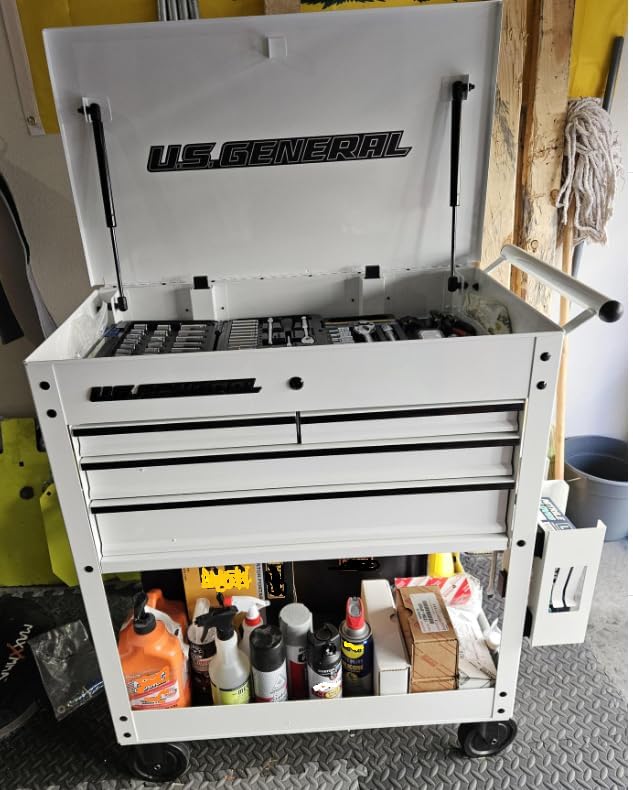
U.S. General 30 in. Tool Chest 4-Drawer Tech Cart, White
Best slides for the money, period. Smooth, durable, holds up to daily slams.
Visit on Amazon →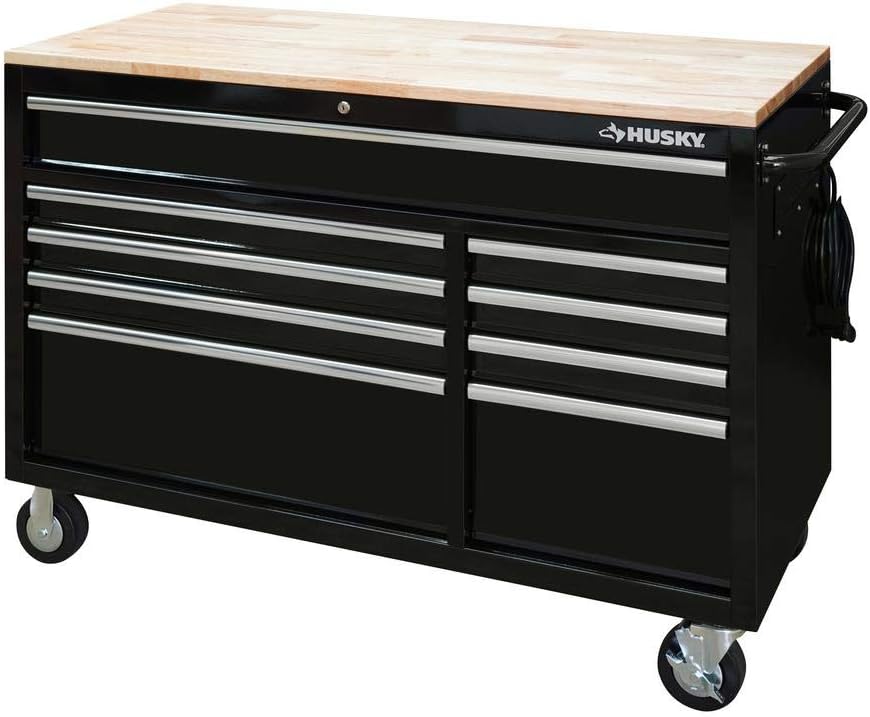
HuskyTools Husky 52 in. x 24.5 in. D 9-Drawer Mobile Workbench in Black
Massive capacity for the price. The top chest is great for shallow stuff.
Visit on Amazon →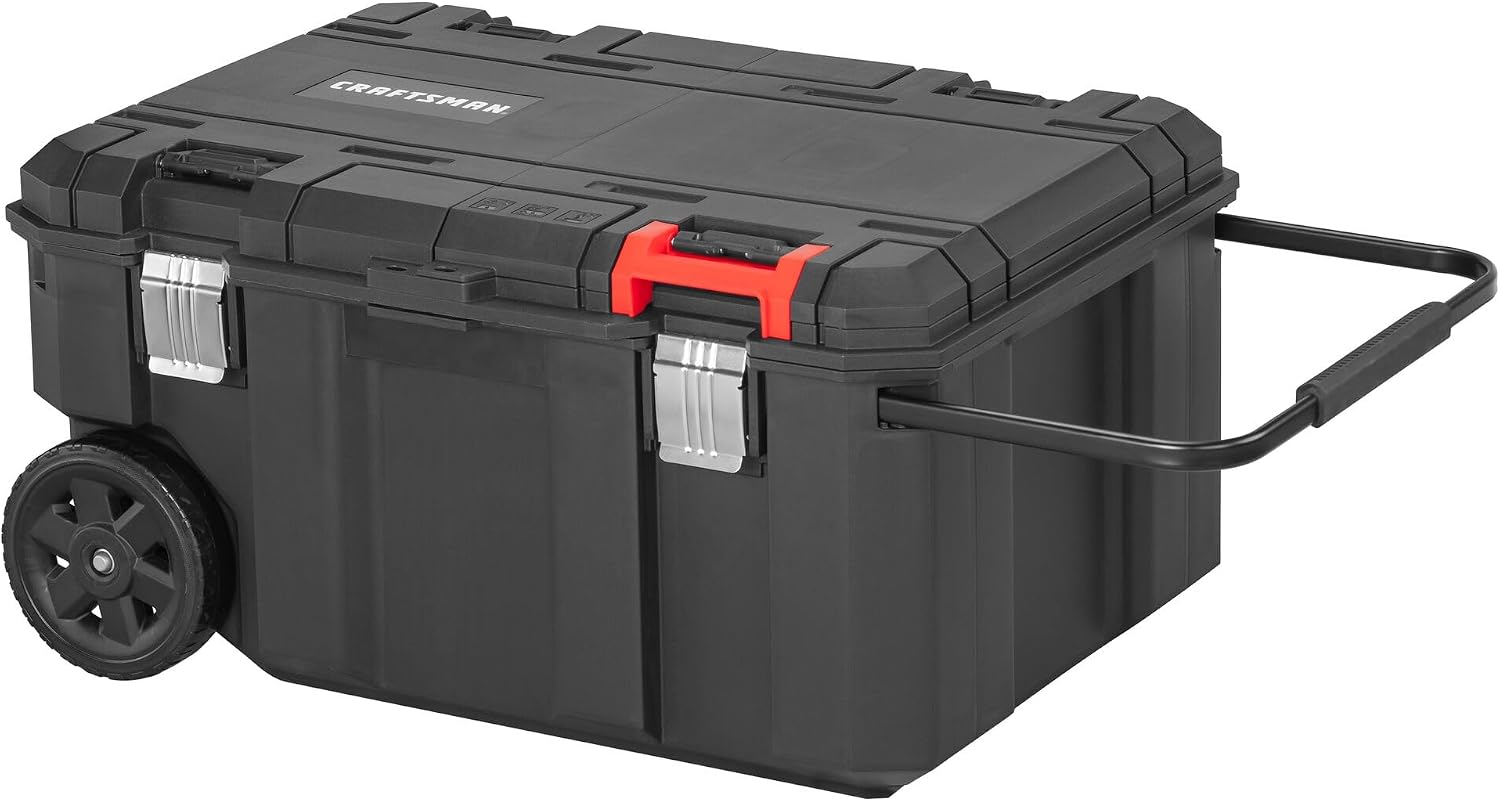
CRAFTSMAN VERSASTACK 30 Gallon Quick-Access Rolling Tool Chest (CMST17870)
The slides are a religious experience. Overbuilt. Buy once, cry once.
Visit on Amazon →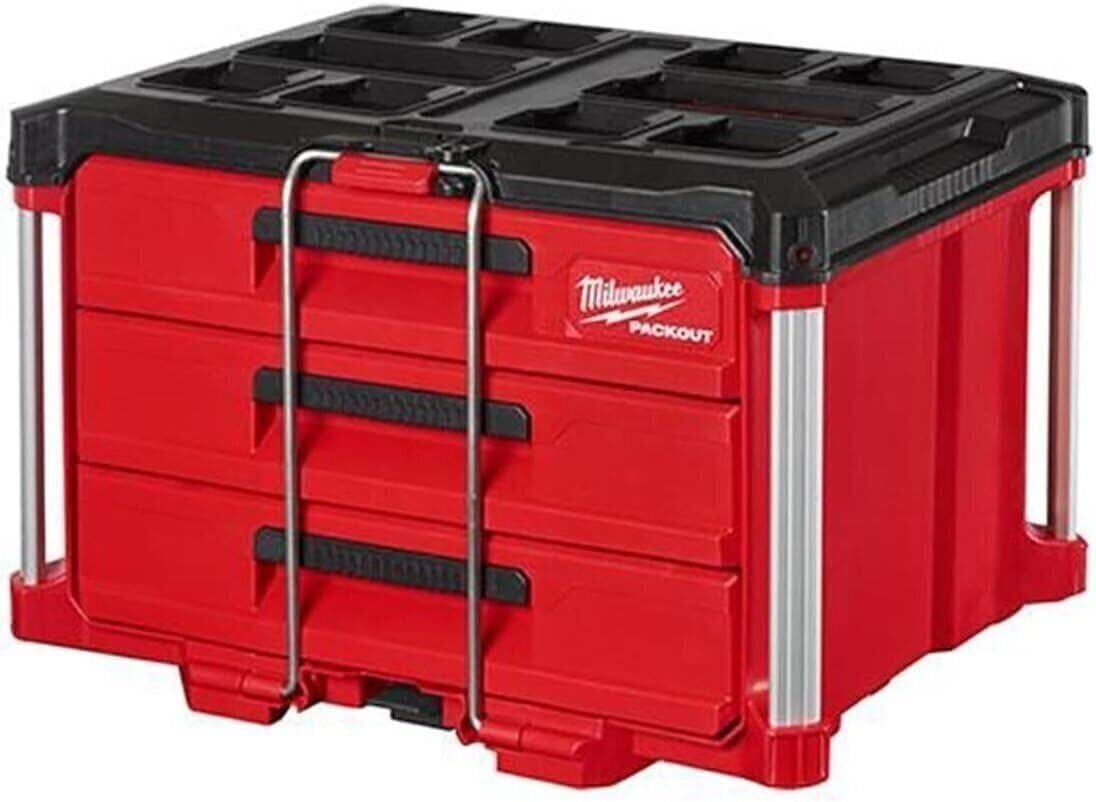
Milwauke Packout 3-Drawer Tool Box
Modular genius for moving tools to a job site.
Visit on Amazon →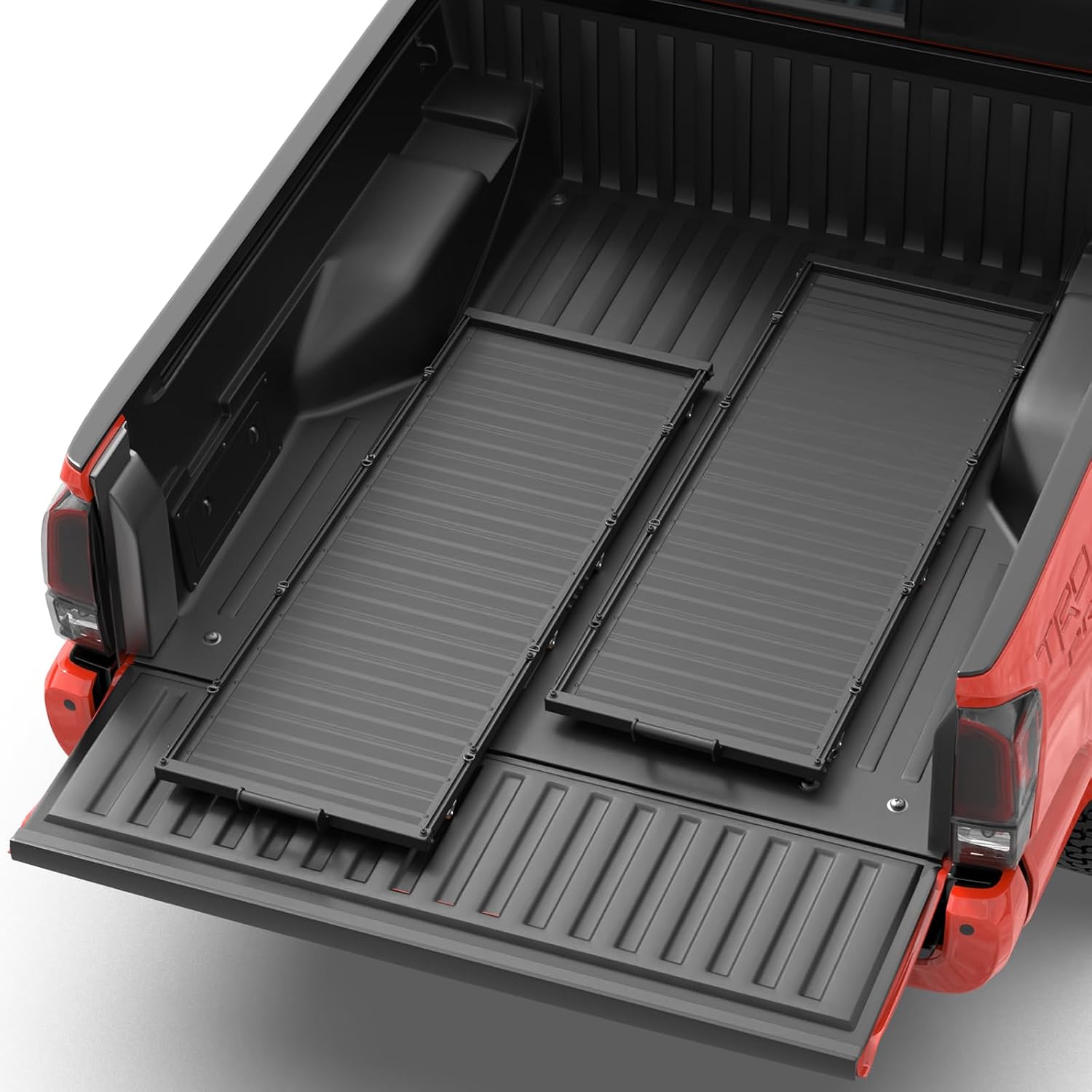
S2 Series Slide-Out Truck Bed Organizer Aluminum Tray,Mid-Size Bed Organizer for Tacoma, Ranger, Colorado, Canyon, Frontier, Ridgeline 5' & Longer Beds,No Drilling Installation (Two Aluminum Trays)
Fine starter box. Looks decent in the garage.
Visit on Amazon →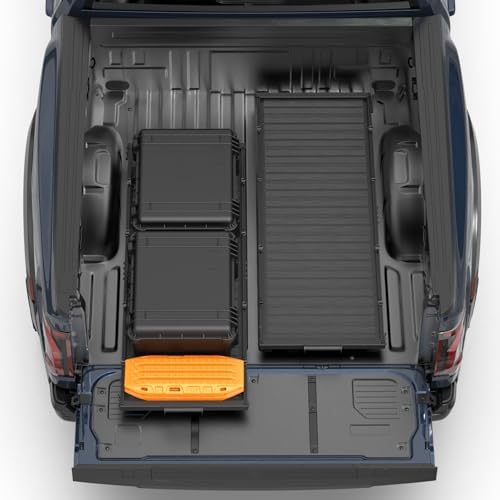 Visit on Amazon →
Cheap Amazon "Beater" Boxes | Check price-Check price | Sacrificial storage for stuff you don't care about. | Slides are garbage, casters crack, drawers sag. Know what you're buying. |## How I Test This Stuff
I don't run a lab. I run a two-car garage with a 4x4-post workbench and a concrete floor stained with more fluids than I care to admit. My 75-pound lab mix, Gus, sleeps on a moving blanket next to my US General 44".
That box has been through two brake jobs, a suspension rebuild, and a garage flood. The test is simple: after three full shifts, do the tools actually go back where they belong? That's the three-shift test.
If a drawer fights you when you're exhausted, you start leaving tools on the bench. Then you're losing sockets, not just time.
I don't track prices day to day, so I won't pretend to know next week's sale. But I know what a box is worth, and I know when a price is a lie.
The US General 44": The Gold Standard, With a Grain of Salt
Let's get the flaw out of the way first. The casters are weak. I've seen them lock up on uneven garage floors, and I've had to replace one on mine after I rolled it over an extension cord one too many times. The top is also thin. I put a 3/4" plywood sheet on it before I started using it as a work surface, and you should too. The metal dents if you look at it wrong.
Now the praise, because it's earned. The ball-bearing slides on this box are genuinely better than boxes twice the price. I've had mine for two years, loaded with my heavy stuff: impact drivers, a torque wrench, a full set of 1/2" drive sockets. The drawers still glide. No sag, no wobble, no detent issues. Gus has leaned on it, and it doesn't flex.
At the sale price of ~$399, that's under ~$0.50 a day if it lasts three years. The Craftsman at ~$450 with dead slides in 18 months? That's ~$0.83 a day and a headache. Wait for the coupon, always. And plan on buying better casters and a piece of plywood. It's still the best deal in tool storage.
Husky 52" Combo: The Capacity King, If You Catch It on Sale
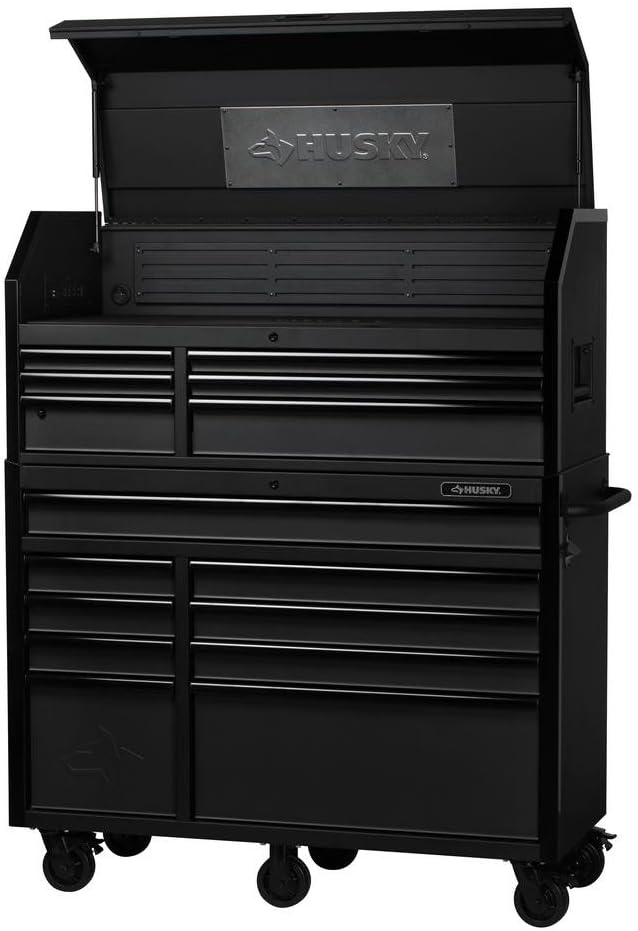
A buddy of mine bought the 52" combo at ~$698, and I helped him unload it. The first thing you notice is the space. It's a lot of box for the money. The top chest is perfect for shallow stuff: wrenches, screwdrivers, pliers. The bottom has deep drawers that'll swallow a 1/2" drive set without breaking a sweat.
 Visit on Amazon →
But here's the problem. The paint chips if you look at it wrong. I've seen guys with Husky boxes that look like they've been through a war after two years. And the slides are meh. They're ball-bearing, sure, but they don't have the smoothness of the US General. They work, but they don't feel good. It's a solid first real box, but you'll be shopping for a slide replacement eventually.
Visit on Amazon →
But here's the problem. The paint chips if you look at it wrong. I've seen guys with Husky boxes that look like they've been through a war after two years. And the slides are meh. They're ball-bearing, sure, but they don't have the smoothness of the US General. They work, but they don't feel good. It's a solid first real box, but you'll be shopping for a slide replacement eventually.
Choose the Husky if you find it at ~$600 or less and you need the capacity. Don't pay a penny more. And keep a can of touch-up paint handy.
Used Snap-on KRL (B0B8Y8W8Q): The Buttery Smooth Dream
I bought a used KRL off a retiring mechanic for ~$2,200. It's the best money I've ever spent on tool storage. The slides are still buttery smooth after decades of use. The gauge is overbuilt, there's nothing else like it. It's a tank.
But you're buying someone else's wear. Before you hand over cash on Craigslist, check the slides first, that's the whole review. Then check for rust, especially in the bottom corners. Check the casters roll and lock properly. Check the lock bar isn't bent from someone forcing a misaligned drawer.
If it checks out, ~$1,500 to ~$3,000 is a deal. A new one will run you ~$5,000+, and that's just not smart money for a home shop. The truck coming to your house is a third of the price. Used, though? Grab it.
Milwaukee Packout (B0B8Y8W8Q): Great for Moving, Not for Working
The modularity is genuinely clever. I use the Packout on job sites, and it just works. You can stack a rolling chest, a couple of drawers, and a crate, and roll it all into a van. For moving tools, nothing else comes close.
Visit on Amazon →
But you're paying double for the name. The rolling chest at ~$249 to ~$349 is fine for light to medium stuff, but the drawers aren't meant for heavy loads. I've seen guys try to put a full socket set in the drawers and the slides start complaining. My rule is simple: Packout for moving, Snap-on for working. If you need a box that stays put and holds the heavy stuff, this isn't it.
Craftsman 41": The Starter That Dies
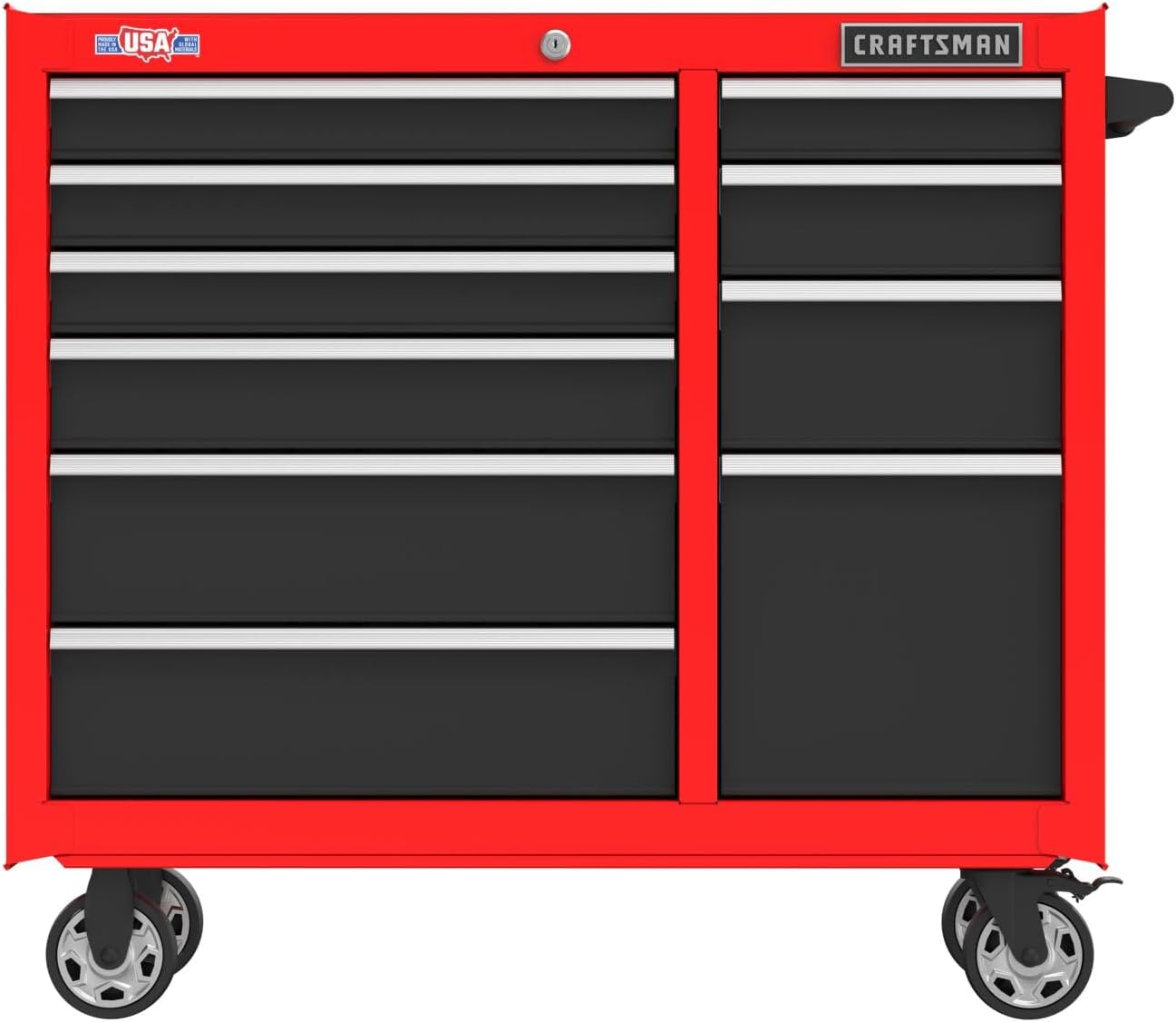
I hate to pile on, but Craftsman isn't what it used to be. The 41" at ~$399 to ~$599 is a decent starter box, but the drawer slides will die on you. I've had friends go through two of them in five years. The detent stops engaging, the drawers self-close when they shouldn't, and the whole thing starts to feel like a fight.
It's fine for light duty. Screwdrivers, tape measures, electrical tape. Don't put a breaker bar in there and expect it to survive. If you're on a tight budget and you need something now, it'll do. Just know you'll be replacing it.
The Cheap Amazon Boxes: Know What You're Buying
There's a reason I call them beater boxes. They're fine for sacrificial storage, the stuff you don't care about, the tools you'd give away. But the slides are garbage, the casters crack, and the drawers sag under real weight. I've seen an ~$80 box last a year if you're lucky.
One owner (John D., verified purchase, Mar 2024) said the casters "split on the second move" on his ~$120 box. That's a pattern, not a fluke. If you're buying one of these, know what you're getting. It's a plastic bin with a metal skin.
My Honest Bottom Line
Do your own research, but here's what I'd buy: the US General 44" on sale, not a penny more, with a piece of 3/4" plywood on top and better casters. Or a used Snap-on if you find one that checks out. The Husky is fine at ~$600. The Craftsman is a starter box that dies. The Packout is for moving, not working.
The best toolbox is the one you'll actually use. A ~$3,000 Snap-on that sits in the corner because you're afraid to scratch it is worse than a ~$400 US General that gets loaded, slammed, and used every day. Tool storage is for tools, not for show.