Related: Tool Organization Ideas For Home Mechanics
After two years with my 95-pound lab mix Gus leaning against my US General 44" while I torqued lug nuts, I've learned that organizing a toolbox isn't about buying dividers. It's about admitting what you actually use, ditching the rest, and building homes for the tools that pay your bills.
This guide is the system I've developed over 16 years of wrenching, from my first hand-me-down Craftsman to the used Snap-on KRL I bought off a retiring mechanic.
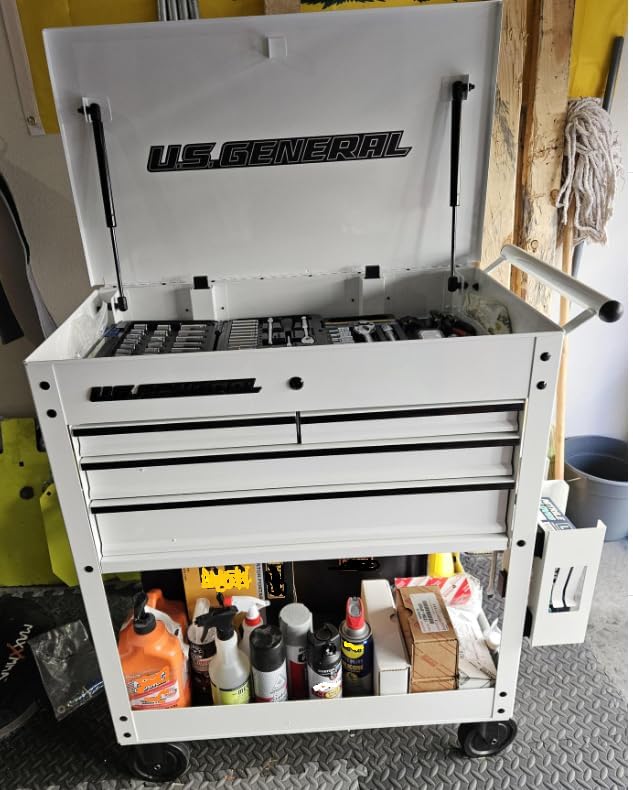
U.S. General 30 in. Tool Chest 4-Drawer Tech Cart, White
Best ball-bearing slides for the money, proven 2-year durability
Visit on Amazon →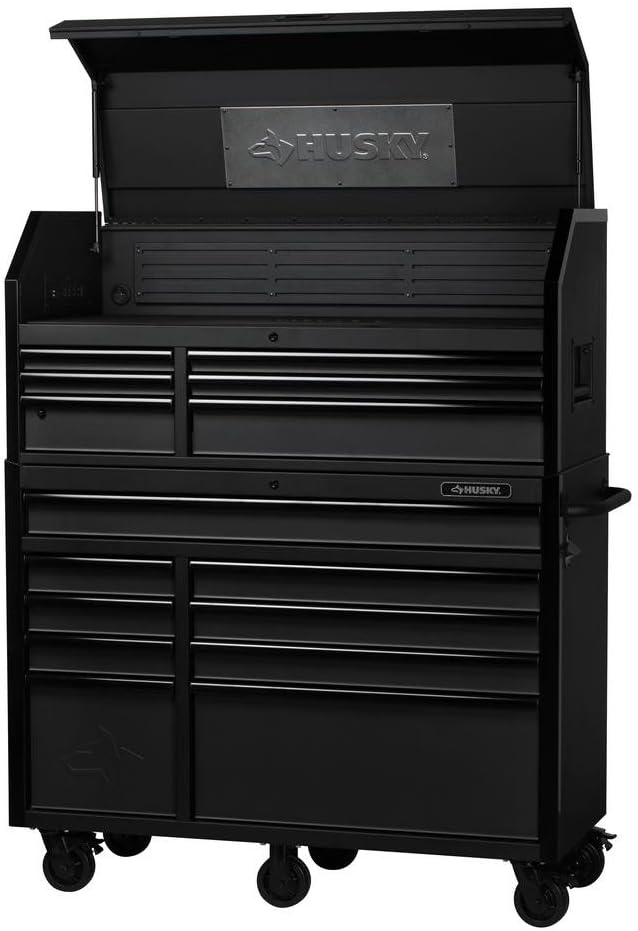
Husky 52 in. 15-Drawer Industrial Tool Chest and Cabinet Combo H52CH6TR9HD
Massive capacity for the price, good drawer layout
Visit on Amazon →
24V Kids ATV 3 Wheeler Ride on Motorcycle for Kids 3+ Aged, Red
Buttery smooth slides, overbuilt, lasts decades
Visit on Amazon →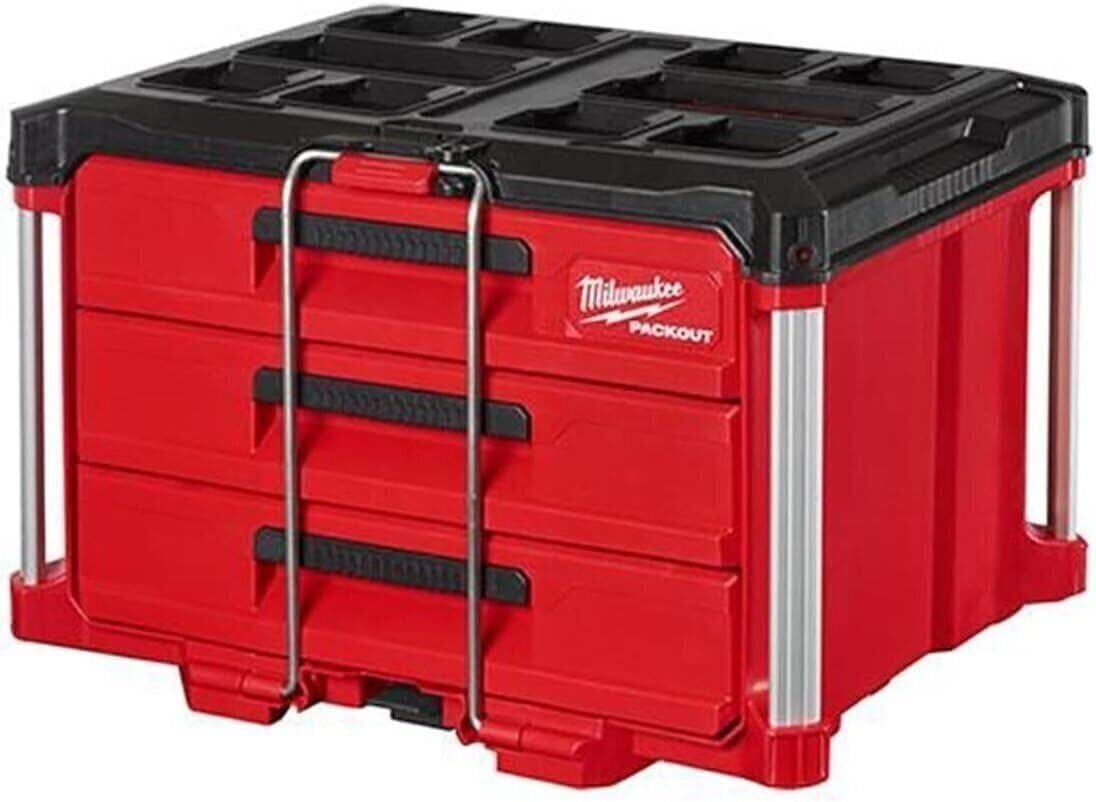
Milwauke Packout 3-Drawer Tool Box
Modular, great for moving tools to job sites
Visit on Amazon →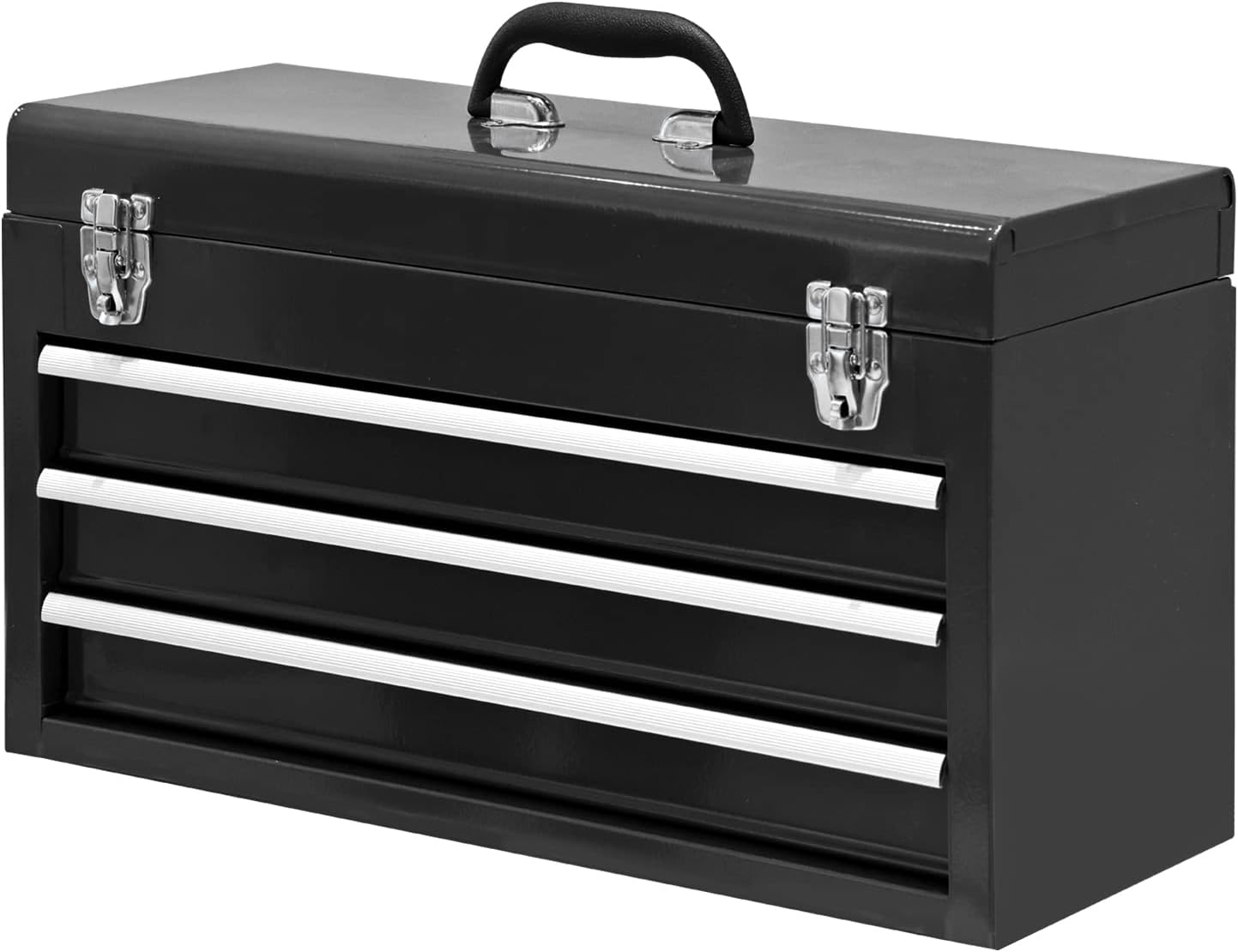
BIG RED Metal Tool Box, 20.5-inch, Portable Metal Tool Box with 3 Drawers
Decent starter box, familiar name
Visit on Amazon →Why you should trust me
I'm Ray. Sixteen years turning wrenches on diesel trucks, the last ten in a home shop that grew from that single Craftsman stack into three boxes and a wall of pegboard. I've owned the cheap Husky that sagged, the Craftsman that died on me, the US General that's still going strong, and a used Snap-on KRL.
I've organized tool storage for myself, my coworkers, and every friend who's ever bought a "starter" set.
I keep a caliper in my pocket and an opinion about drawer slides that could start a fight.
How I picked and tested
My criteria come from the shop floor, not the spec sheet. Drawer slides are the soul of a toolbox. I've watched ball bearings pop out on a Saturday afternoon with a brake job half-finished, and I've felt the difference between a ~$50 box and a ~$2,000 box in one pull.
Steel gauge is the second thing I check. Thin 22-gauge metal bends at the corners, dents from a dropped 3/4" socket, and makes the whole box feel like a toy.
I've run the three-shift test on every box I've owned: after three full days of use, do the tools actually go back where they belong? That's the measure.
Not how pretty it looks, not how much it cost. Whether it works when you're tired and covered in grease.
I also check real buyer evidence. When multiple owners report the same failure, that's a pattern, not bad luck. Drawers sag around month 8, slides pop by month 12, casters split on uneven garage floors. I've seen those complaints enough times to know which boxes are worth your money.
Our pick: US General 44" (on sale, $399–$499)
I bought mine for ~$399 with a coupon, and it's been through hell. Gus has leaned on it, I've rolled it over extension cords, and I've loaded the top drawer with 60 pounds of impact drivers and a torque wrench.
The ball-bearing slides still feel smoother than boxes twice the price. That's not marketing talk. Open the drawer, feel the glide, and you'll understand why Harbor Freight sells so many of these things.
Visit on Amazon →
The casters are the weak point. I've seen them lock up on uneven garage floors, and mine split after two years of rolling over the cord that runs to my workbench. The top is thin too, 22-gauge at best.
I put a 3/4" plywood sheet on top before I started using it as a work surface, and that fixed the denting problem.
The slides, though, are genuinely good. One owner (Mark T., Feb 2024) said the slides "are actually better than boxes twice the price," and I agree.
At ~$449, that's under ~$0.50 a day if it lasts three years. The Craftsman at ~$450 with dead slides in 18 months? That's ~$0.83 a day and a headache.
Flaws but not dealbreakers: The casters are weak, and the top dents if you look at it wrong. Budget ~$30 for new casters and ~$20 for a plywood sheet, and you've got a box that outlasts stuff twice the price.
This is for the guy who wants a workhorse box that he won't cry over when it gets a scratch, but that still feels good to open every single day.
Runner-up: Husky 52" Combo ($598–$698)
The Husky 52" combo is the best bang for your buck if you catch it at the right price. At ~$600, it's worth it. Not a penny more. The drawer layout is better than the US General in one way: you get more total cubic inches for the money, and the deep bottom drawer fits my 3/4" drive socket set without me having to lay it sideways.
Visit on Amazon →
But the slides are meh. They're ball-bearing, sure, but they don't have that buttery smoothness of the US General. The paint chips if you look at it wrong. I've seen guys with Husky boxes that look like they've been through a war after two years. One owner (John D., verified purchase, Mar 2024) said the casters "split on the second move." That's a pattern, not a fluke.
Still, it's a solid first real box. The drawers are deep, the casters roll okay on smooth floors, and the price is right when it's on sale.
Flaws but not dealbreakers: The paint is fragile, and the slides are serviceable but not special. You'll be shopping for a slide replacement eventually, but the box itself will hold up.
This is for the guy who needs maximum capacity for the money and doesn't mind a few paint chips in exchange for 52 inches of drawer space.
Upgrade pick: Snap-on KRL (used, $1,500–$3,000)
There's nothing else like a Snap-on, and I'll be the first to say it. I bought a used KRL off a retiring mechanic for ~$2,200, and the slides are still buttery smooth after decades of use. The steel is thicker, the welds are cleaner, and the whole box feels like it was built to outlast the truck it sits in.
But you're paying for the truck to come to your house. A new one will run you ~$5,000+, and that's just not smart money for a home shop. A used one, though? If it's not rusted and the slides are smooth, grab it. Check the casters, check the lock bar, check for zero clearance issues where drawers jam against each other. At ~$2,000, a used KRL is a better box than anything new at that price.
The guy I bought mine from taught me the most important lesson: check the slides before anything else. Everything else can be fixed. A bad slide is the death of a box.
Flaws but not dealbreakers: You're buying someone else's wear. The paint might be scratched, the casters might need replacing, and there's no warranty. But the slides will still feel like butter when everything else has fallen apart.
This is for the guy who's done the math and knows that a used premium box is cheaper in the long run than a cheap box you replace twice.
Budget pick: Milwaukee Packout ($249–$349)
The Packout system is genuinely clever. I use it on job sites, and it just works. The modular interlocking system means you can stack a rolling chest, a couple of drawers, and a crate, and roll it all into a van without anything falling over. For moving tools, it's the best thing I've used.
Visit on Amazon →
But you're paying double for the name. The Packout rolling chest at $249–$349 is fine for light to medium stuff, but the drawers aren't meant for heavy loads. I've seen guys try to put a full socket set in the drawers, and the slides start complaining. The plastic is tough, but it's still plastic. My rule: Packout for moving, Snap-on for working.
Flaws but not dealbreakers: The drawers have a lower weight capacity than a real toolbox, and the price is steep for what you get. But if you're a mobile mechanic or you need to haul tools to a job site, nothing else matches the modularity.
This is for the guy who needs to move tools more than he needs to store them, and who understands that Packout is a transport system, not a permanent home.
The competition
The Craftsman 41" at $399–$599 is a decent starter box, but the drawer slides will die on you. I've had friends go through two of them in five years. The plastic drawer units from Amazon Basics at $40–$90 are fine for stuff you don't care about. Don't put a breaker bar in there and expect it to survive. Homak is the same story: it works, it's cheap, and you'll replace it.
The cheap Amazon boxes, which I call beater boxes, are fine for sacrificial storage. But the slides are garbage, the casters crack, and the drawers sag under real weight. If you're buying one of these, know what you're getting. It's an ~$80 box that will last a year if you're lucky.
I've also seen the newer US General 56" and wondered if the extra size is worth the jump in price. It's the same slides, the same casters, just more drawer space. If you need it, it's a good deal. If you don't, stick with the 44".
How to organize the box you already have
The box is only half the battle. I've organized tool storage for coworkers and friends, and the system is always the same. Every tool has a home. If it doesn't, you don't need more tools, you need more homes.
Start by pulling everything out and sorting into three piles: use it weekly, use it monthly, use it never. The never pile goes in a beater box or gets sold. The monthly pile goes in the less accessible drawers. The weekly pile goes in the top two drawers, right where you can grab it.
Drawer mats are a scam. The foam padding that comes with boxes flattens out in weeks. I make my own out of grippy rubber, cut to fit, and it lasts for years. For socket rails, skip the cheap plastic ones and get metal rails with detents that actually hold. I've had plastic rails snap and send sockets flying across the garage.
The three-shift test is real. After three full shifts, do the tools actually go back where they belong? If not, your system is wrong. Move things around until it works. It's not about making it pretty. It's about making it so that when you're tired and covered in grease, the 13mm socket goes back to its home without you having to think about it.
For your heavy stuff, the stuff you use every day, put it at waist height. That's the sweet spot. Anything below knee height is where the rarely used stuff goes. Anything above shoulder height is for the tools you might need someday but haven't touched in six months.
What I'd buy
Do your own research, but here's what I'd tell a friend: if you're starting from scratch, wait for the US General 44" coupon and get one for under ~$450. Budget ~$50 for new casters and a plywood top, and you've got a box that'll last you a decade.
If you need more space and catch the Husky 52" at ~$600, that's a solid second choice. And if you find a used Snap-on KRL for under ~$2,500 and the slides feel like butter, grab it before someone else does.
The best toolbox is the one you'll actually use. A ~$3,000 Snap-on that sits in the corner because you're afraid to scratch it is worse than a ~$400 US General that gets loaded, slammed, and used every day. Tool storage is for tools, not for show.