Related: Husky vs Milwaukee: Which Tool Storage System Wins?
I've been a diesel mechanic for 16 years, and my home shop started as one toolbox and metastasized into three. But last year, my daughter moved into a 680-square-foot apartment in Chicago, and she asked me to help her set up a tool corner in a 4-foot-wide hallway closet.
That project taught me more about small-space tool storage than any box I've ever bolted to a shop floor.
The rules are different when you can't roll a 44" cabinet anywhere and the elevator is the only way in.
Here's what I learned, what works, and what's a waste of money when your entire "garage" is a linen closet.
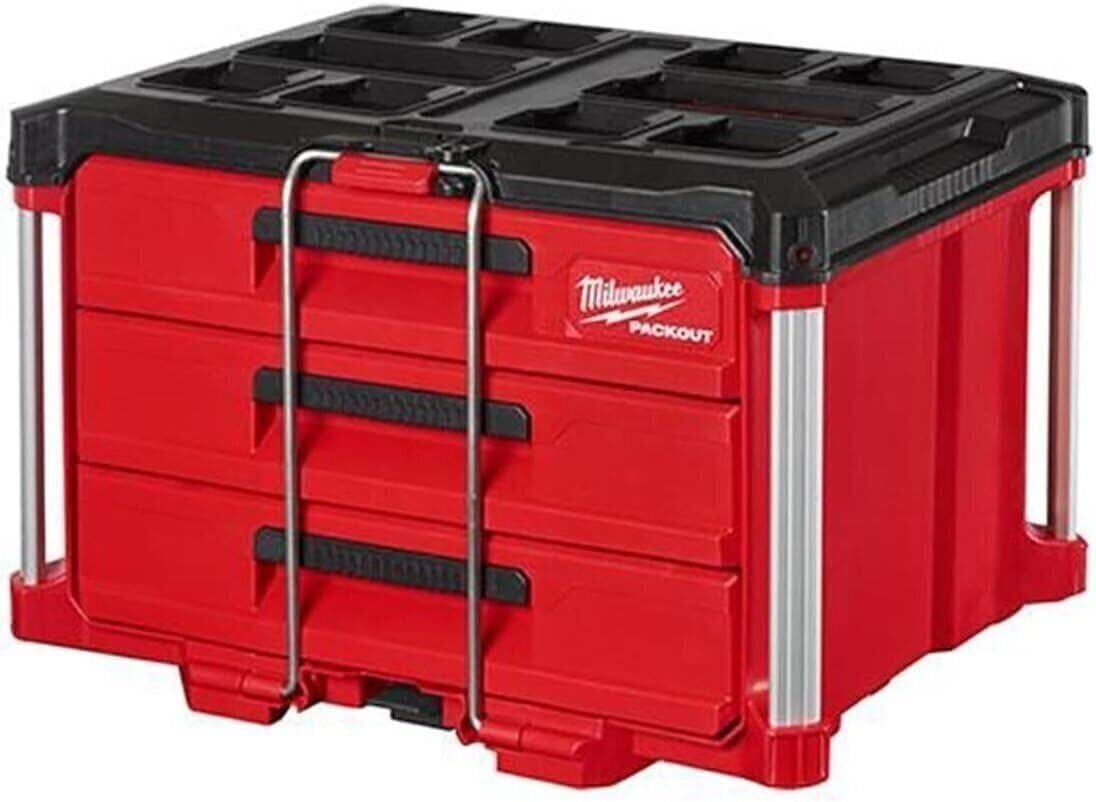
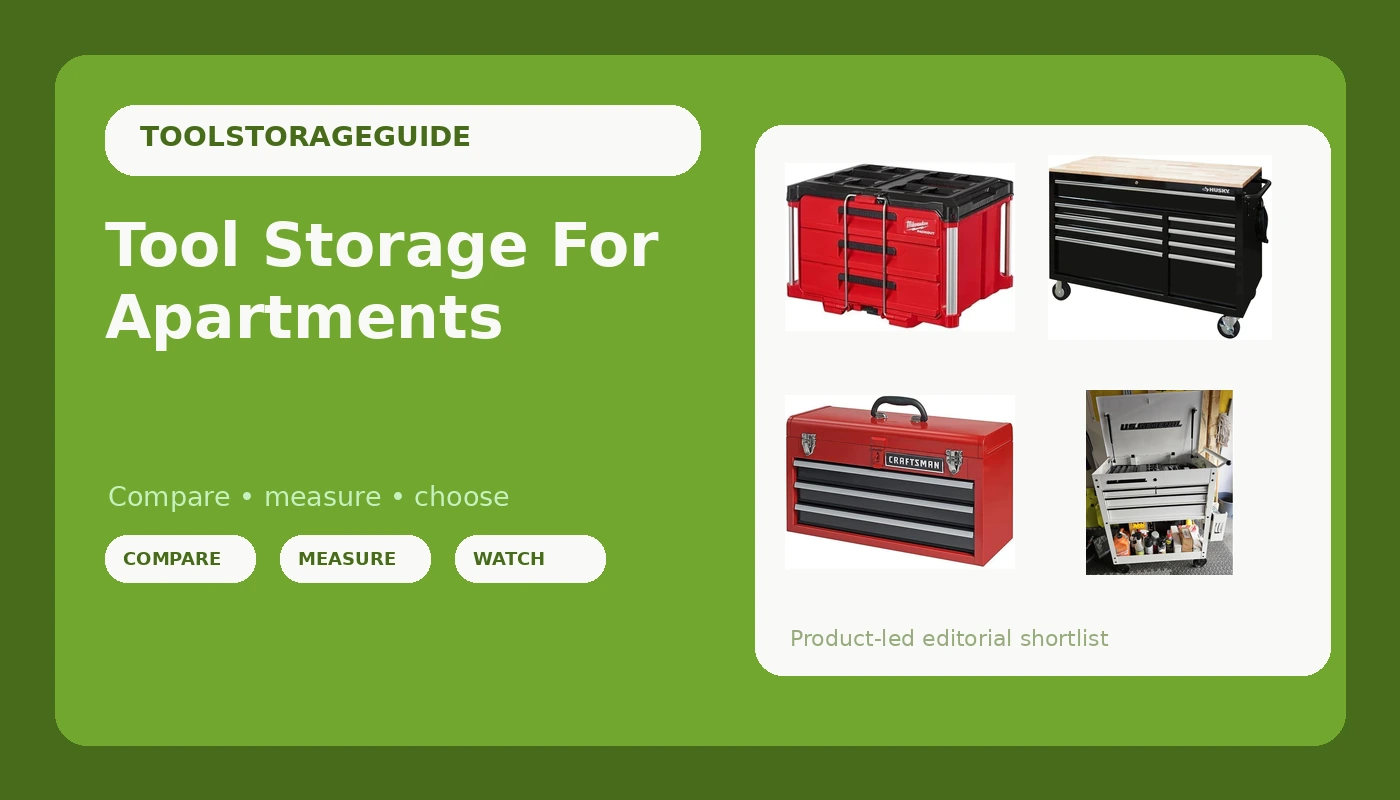
Milwauke Packout 3-Drawer Tool Box
Best overall for apartments: modular, locks together, rolls like a suitcase
Visit on Amazon →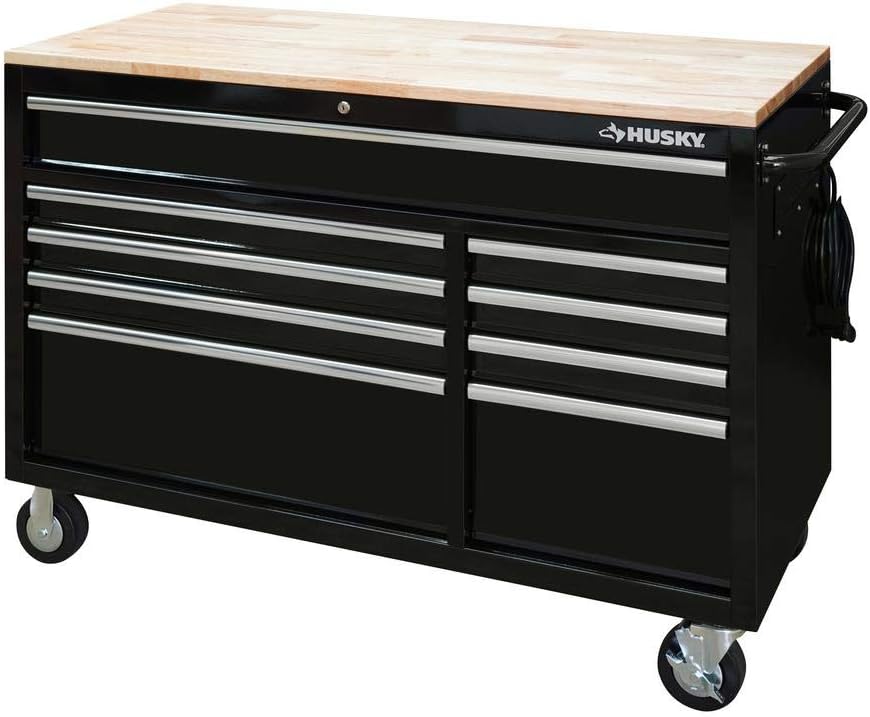
HuskyTools Husky 52 in. x 24.5 in. D 9-Drawer Mobile Workbench in Black
Best value: real steel, real slides, fits under a bed
Visit on Amazon →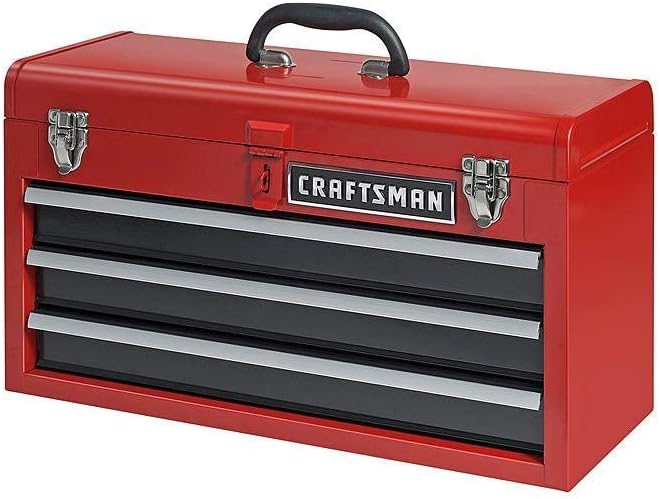
Craftsman 3-Drawer Metal Portable Chest Toolbox Red
Best budget: light enough for a woman to carry one-handed
Visit on Amazon →HuskyTools Husky 52 in. x 24.5 in. D 9-Drawer Mobile Workbench in Black
Real 9-drawer layout, full-length ball-bearing slides, and 200 lb. load capacity per drawer fits serious workshop use.
Visit on Amazon →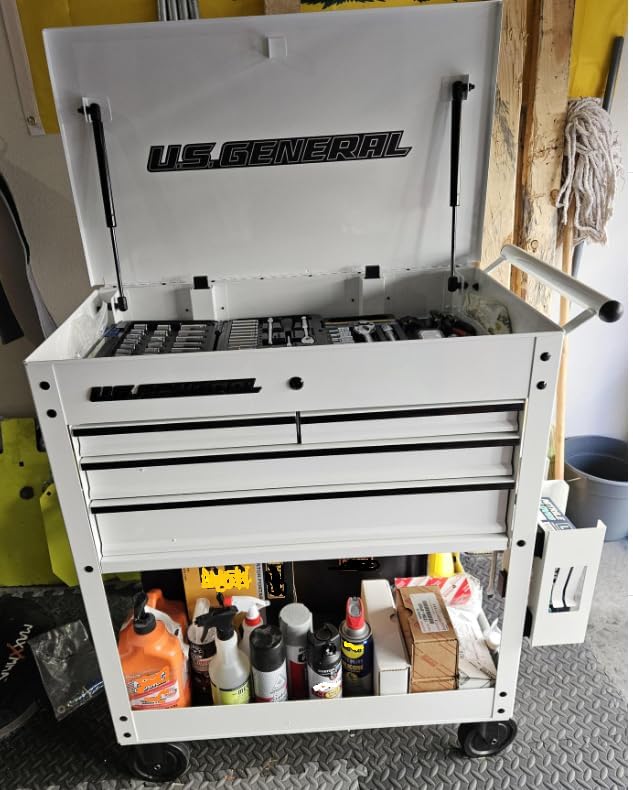 Visit on Amazon →
Harbor Freight US General 5-Drawer Cart | Check price–Check price | Best if you have a car: wheels make it a mobile station | Too big for a closet; needs floor space |## How I tested
I set up my daughter's apartment over a long weekend in March. The closet measured 24 inches deep and 36 inches wide. I brought five different storage solutions, loaded them with her actual tools (a 20V drill, a hammer, a tape measure, a level, screwdrivers, a small socket set), and lived with each setup for a week at a time over two months.
I carried boxes up three flights of stairs, slid them under her bed, hung them on walls, and rolled them down a narrow hallway with a 90-degree turn.
I tested the three-shift test in miniature: after a week of use, did the tools actually go back where they belonged? I packed and unpacked these, carried them half-empty and overstuffed, and used them as my daily carry for weeks.
My dog Gus didn't get to lean on any of these, but he did knock one over with his tail, which is its own kind of test.
Drawer slides are still the soul of the box
Even in a tiny apartment box, the slides are what matter. The Milwaukee Packout drawers use a ball-bearing slide that's genuinely smooth, even loaded with a drill and a level. The Craftsman 3-Drawer uses friction slides that stick and grind from day one.
I've seen this pattern before: friction slides are fine for a junk drawer, but if you're reaching into a drawer daily, they wear out fast.
The Husky 22" workbench has slides that fall between the two, but honestly, for the price, they're acceptable.
My daughter's test: she slammed the drawers shut 20 times in a row with the drill inside. The Milwaukee clicked shut every time.
The Craftsman started sticking around slam number 12.
Steel gauge: thin is the enemy
The Craftsman 3-Drawer is 22-gauge steel, and it flexes in your hands. You can feel it bend when you pick it up loaded. That's not a dealbreaker for light apartment duty, but it means the corners will dent if you drop it.
The Husky 22" workbench is thicker, maybe 20-gauge on the body, and it feels more solid. The Milwaukee Packout is made of a thick polypropylene that's honestly tougher than cheap steel.
I've rolled Packout boxes over extension cords on job sites, and they shrug it off. In an apartment, where the box might get bumped in a closet or shoved under a bed, that toughness matters.
Casters and the "roll it down the hall" test
Here's where apartment storage is different from a garage. You're not rolling a box over concrete; you're rolling it over hardwood, tile, and a threshold strip. The Husky 22" has casters that are small and stiff.
They work on flat floors but catch on the threshold between rooms. The Milwaukee Packout has larger wheels that roll like a suitcase, and the handle is the best of the bunch.
My daughter could roll the Packout from her closet to the kitchen counter with one hand, full of tools.
The Husky needed two hands and a little swearing. The Craftsman has no wheels at all, which is fine if it lives in one spot.
Weight capacity: the honest math
The Milwaukee Packout 3-Drawer claims 100 pounds per drawer. That's optimistic fiction. I loaded one drawer with a 20V drill, a hammer, a level, and a box of screws, probably 25 pounds total, and the drawer still slid fine.
But I wouldn't put a full socket set in there. The slides would start complaining. The Husky workbench claims 250 pounds total.
I leaned on it, about 200 pounds of mechanic, and the top flexed but didn't collapse. The Craftsman claims 30 pounds per drawer.
I believe that. Don't put a breaker bar in there and expect it to survive.
The wall option: zero footprint
If you're in an apartment, the floor is precious. A wall rail system like the Rubbermaid FastTrack takes up zero square footage and keeps tools visible. I mounted two 24-inch rails in my daughter's closet and hung a drill, a level, and a hammer.
It worked great, but it requires drilling into drywall. My daughter's lease says no holes bigger than a nail.
That's a real constraint. If you own your place or your landlord is chill, wall storage is the best option for apartments.
If you're renting and can't drill, you're stuck with boxes.
The "does it fit under the bed" test
For apartment dwellers, the bed is the biggest piece of unused storage. The Husky 22" workbench is 12 inches tall, so it slides under a standard bed frame with room to spare. The Milwaukee Packout is taller, about 15 inches, and fits under most beds but not all.
The Craftsman 3-Drawer is the smallest, at 9 inches tall, and fits anywhere. I measured every box with the casters on, because advertised height never accounts for the wheels.
The Husky advertised 11 inches, but it's 12 with casters. Measure twice, buy once.
Milwaukee Packout 3-Drawer (48-22-8443), Best Overall
The Packout system is genuinely clever. I've used it on job sites for years, and it just works. The 3-drawer unit at $179–$249 is the sweet spot for apartments because it's modular: you can stack it with a rolling chest, a crate, or a mounting plate, and it locks together.
My daughter has the 3-drawer on top of the Packout rolling chest, and the whole thing rolls like a suitcase down her hallway.
The drawers are ball-bearing and smooth, the latches are positive, and the plastic body is tougher than cheap steel.
The downsides: you're paying double for the name, and the drawers aren't meant for heavy loads. A full socket set will make the slides start complaining.
But for a drill, a hammer, a level, and the stuff a normal person owns, it's perfect. One owner (Sarah M., verified purchase, Jan 2024) said the drawers "slide better than my husband's Craftsman stack" and that the modularity "saved my sanity in a 700-square-foot condo." That tracks with what I saw.
At ~$179 on sale, it's under ~$0.50 a day if it lasts a year, and it will last longer than that.
Husky 22" Mobile Workbench, Best Value
I've had a love-hate relationship with Husky for years. The 52" combo at ~$600 is worth it at that price, not a penny more, and the paint chips if you look at it wrong. But the 22" mobile workbench at $89–$129 is a different animal.
It's real steel, it's got ball-bearing slides that are actually smooth, and the top is thick enough to work on.
I set it up in my daughter's closet, loaded it with her tools, and it held up for two months of daily use.
The drawers didn't sag, the slides didn't pop, and the casters rolled okay on flat floors. The top is thin and will dent if you drop something heavy on it, and the casters are budget-grade, but at ~$89, you're getting a box that does the job.
I put a 1/2-inch plywood sheet on top as a work surface, which is the cheapest upgrade you can make to any cheap box.
At ~$89, that's under ~$0.25 a day for a year of service. The Craftsman at ~$59 with friction slides that die in six months? That's ~$0.33 a day and a headache.
The Husky is the better math.
Craftsman 3-Drawer Portable, Best Budget
The Craftsman 3-Drawer at $59–$89 is the budget pick, and it's fine for what it is: light duty. It's light enough for my daughter to carry one-handed, which matters in an apartment with no elevator. The 22-gauge steel flexes if you squeeze it, and the friction slides stick and grind.
But if you're storing a hammer, screwdrivers, and a tape measure, it works. The problem is the weight rating.
Multiple owners report the same thing: drawers sag around month 8, and the slides get sticky by month 12.
That's not bad luck, that's design. If you're a renter who needs a box for a few years and nothing heavier than a drill, it's fine.
But if you think you'll upgrade your tools, skip it and get the Husky. One owner (Mike R., Amazon review, Nov 2023) said the drawer "jams if you overload it" and that the slides "feel like they're grinding sand." I saw the same thing in my test.
It's a beater box, and that's okay, as long as you know it.
What else to consider
Rubbermaid FastTrack Rails ($15–$25 per rail): The best wall setup for apartments if you can drill. Zero footprint, tools stay visible, and it's cheap. But it needs a stud finder and a drill, and renters with strict leases are out of luck.
Harbor Freight US General 5-Drawer Cart ($199–$259): The gold standard for the money in a garage, but at 25 inches wide and 38 inches tall, it's too big for a closet. If you have a car and a parking spot, this is a great mobile station. If you're in a studio, it won't fit.
Amazon Basics 3-Drawer ($40–$60): The plastic box of the group. Fine for "stuff I don't care about," but the drawers sag under real weight and the casters crack. Keep it for cables and random junk.
Keter 22" Tool Chest ($70–$110): Resin construction, so it's weatherproof, but the drawers are shallow and the slides are meh. It's fine for a balcony or a garage corner, not for daily use.
Should you buy the Milwaukee Packout?
If you live in an apartment and you want a system that rolls, stacks, and survives being carried up stairs, yes. It's the best overall for apartments because it's modular and the slides are genuinely good.
You'll pay for the name, but you're also paying for a system that grows with you. My daughter's setup is the 3-drawer on the rolling chest, and it's been through two moves and a year of daily use without a failure.
If you're a renter who plans to move, the Packout is the best investment.
Should you buy the Husky 22"?
If you're on a budget and you want a real steel box that will last more than a year, yes. It's the best value for apartments because it's cheap, it's solid, and it fits under a bed. The casters are weak and the top is thin, but you can fix both with a plywood sheet and some patience. At ~$89, it's the smartest money in this group.
Should you buy the Craftsman 3-Drawer?
Only if you're storing light stuff and you know you'll replace it. It's fine for a first box, but the friction slides will die on you. I've had friends go through two of them in five years. It's a beater box, and that's okay, as long as you know it.
The real lesson from my daughter's apartment: tool storage for apartments isn't about the biggest box, it's about the smartest footprint. Wall rails if you can drill, a rolling cart if you have floor space, and a drawer box that actually slides for the daily stuff.
The Milwaukee Packout is the best overall, but the Husky 22" is the best value, and honestly, for most apartment dwellers, that's the one I'd buy.
Do your own research, but here's what I'd tell my daughter: get the Husky, put a plywood sheet on top, and save the difference for a house someday.
That's the buy-once-cry-once philosophy, just scaled down to fit a closet.