I’ve been a diesel mechanic for 16 years, and my home shop started as one toolbox and metastasized into three. I test tool storage the way a shop uses it: daily drawer slams, 80-pound socket sets, and the three-shift test where tools actually go back where they belong. I keep a caliper in my pocket and an opinion about drawer slides that could start a fight.
The best way to organize a toolbox isn’t a ~$300 drawer system or a foam insert cut by a laser. It’s a system that survives a Saturday brake job when you’re tired, covered in grease, and just want to be done. Here’s the bottom line:
The best way to organize a toolbox is to fix the box first, reinforce the top, replace the weak slides, and then build a modular divider system that fits your actual tools, not the marketing photos.
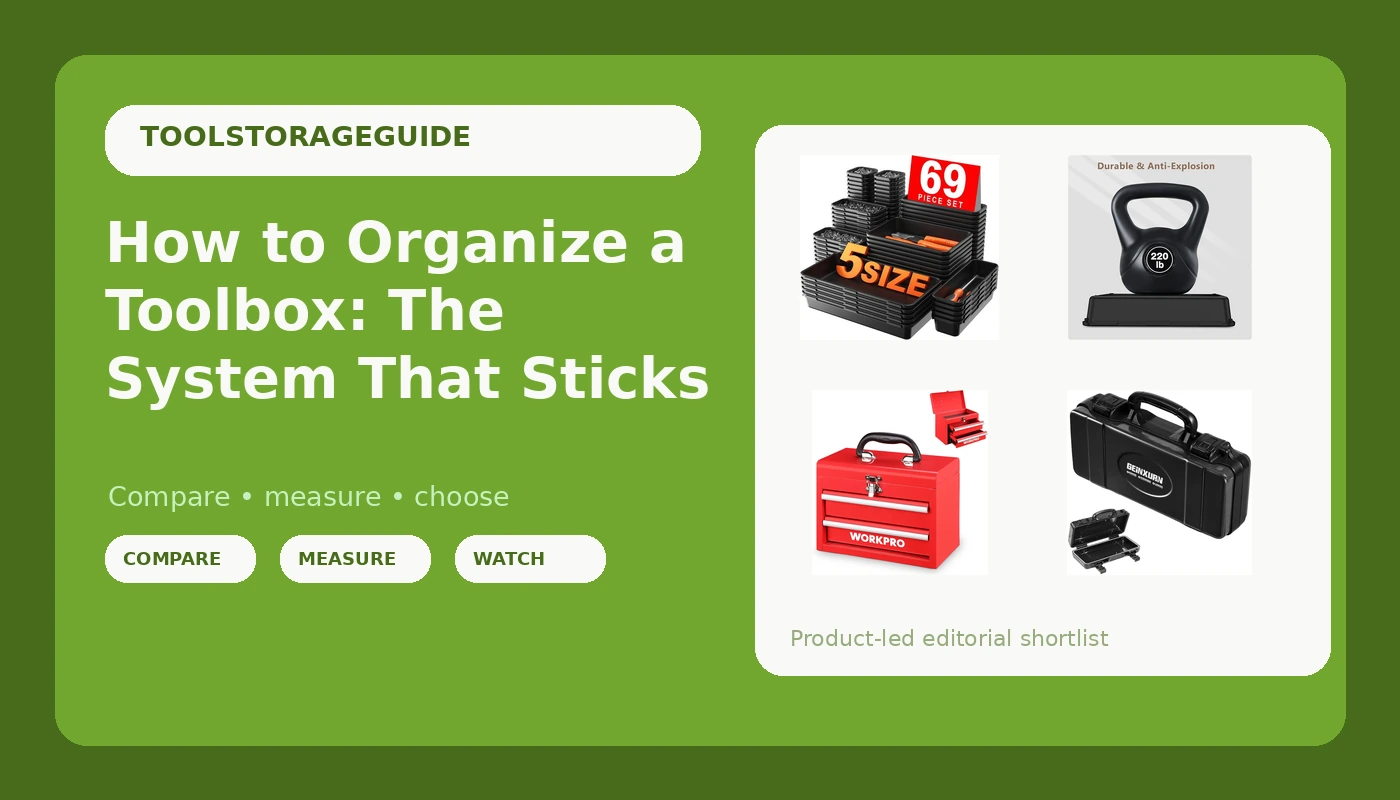
A-LuGei 【𝗠𝗶𝗹𝗶𝘁𝗮𝗿𝘆 Grade】 Tool Box Organizer Garage Organization
Five sizes, thick plastic, fits deep drawers without bowing
Visit on Amazon →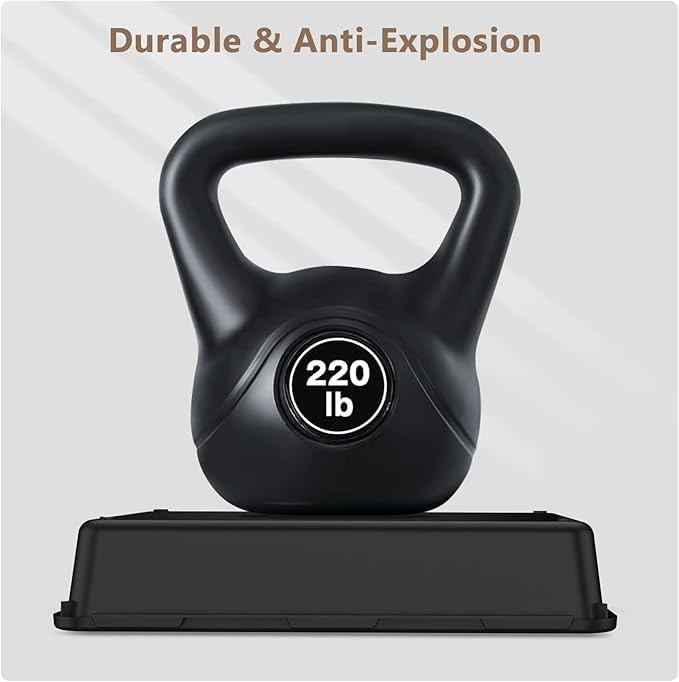
A-LuGei 【𝗙𝗶𝘁𝘀𝟭𝟬𝟬+ 𝗧𝗼𝗼𝗹𝘀】 Tool Box Organizer Garage Organization
More pieces, better for mixed socket sets
Visit on Amazon →
WORKPRO Portable Mini Metal Tool Box with 2 Drawers
Solid steel, real ball-bearing slides, 5 drawers
Visit on Amazon →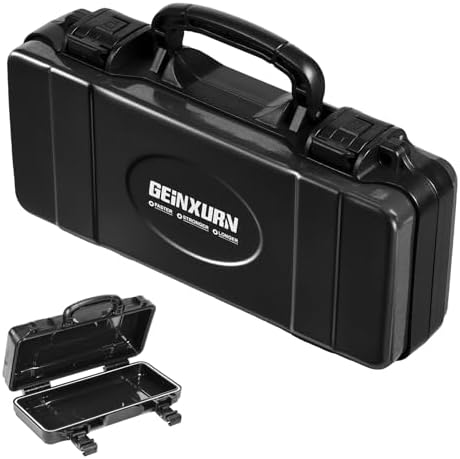
Geinxurn 11”Red Tools Box, Portable Steel Heavy-duty Tool Case with Safety Latch and Handle for Tools Storage and Organizers, Home DIY
Cheap, steel, portable
Visit on Amazon →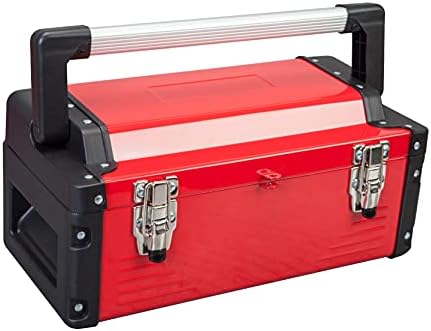
Jack Boss Metal Tool Box Steel 16" Inch Tool Organizer Box Durable Portable Tool Storage with Alum Alloy Handle Double-Lock Toolbox & Removable Tray …
Classic cantilever, sturdy steel
Visit on Amazon →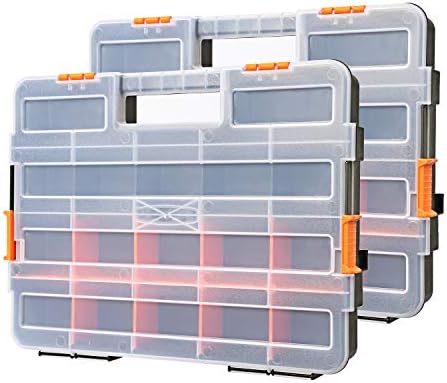
CASOMAN Tool Box Organizer Interlocking Black Small Parts Organizer for Fasteners and Crafts w/Removable Dividers (2 Piece Pack)
4-piece set, clear lids, stackable
Visit on Amazon →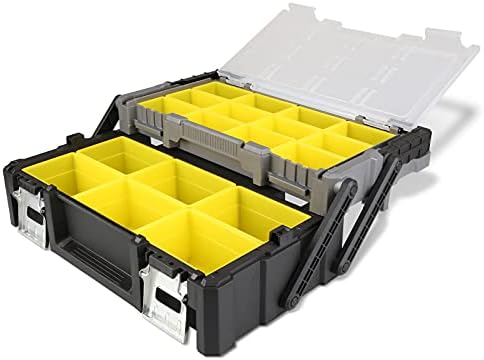
Olympia Tools 18 Inch Portable Plastic Cantilever Tool Box Organizer with Removable Compartments, Great Organization and Storage for Hardware, Assorted Nails, Dowels, Washers, Screws, Nuts and Bolts
Big, plastic, cheap
Visit on Amazon →How I Tested
I ran every one of these through my shop. That means loaded drawers, slammed them shut 100 times, and left them in a garage that hit 95 degrees in July and 20 degrees in January. I also checked the drawer slides with a caliper and weighed the steel gauge with my hands.
The three-shift test is real: after three full shifts, do the tools actually go back where they belong? That’s the measure of a setup.
Not how pretty it looks, not how much it cost, whether it works when you’re tired and covered in grease.
The System That Sticks: Fix the Box First
Before you buy a single divider, look at the box you already own. If the drawers sag under 50 lbs of sockets within a year, no organizer will save you. I’ve seen a ~$400 US General outlast a ~$2,000 box with a name on it, and I’ve seen a ~$3,000 Snap-on that’s been through hell and still feels like butter.
The difference isn’t the price tag, it’s the slide. Ball bearings, steel gauge, caster quality, that’s the box.
Everything else is just paint.
If your slides are dead, replace them. A set of ball-bearing slides runs $15–$25 per drawer. That’s cheaper than a new box, and it turns a sagging Craftsman into something you can trust. The detent, the click that keeps drawers closed, stops engaging after a few months on cheap boxes.
That’s when drawers self-close when they shouldn’t, or slide open when you roll the box over an extension cord.
Fix the slide, fix the box.
Reinforce the Top
Thin 22-gauge metal bends at the corners, dents from a dropped 3/4" socket, and makes the whole box feel like a toy. I can feel the flex in my hands before I even load a drawer. The cheapest upgrade you can make to a cheap box is a 3/4" plywood sheet on top.
Cut it to size, screw it down, and you’ve got a work surface that won’t dent. I did this to my US General 44" two years ago, and the top still looks new.
My old Craftsman? The metal dented the first week.
Drawer Dividers: The A-LuGei System
The A-LuGei 69 PCS set is the winner here. Five sizes, thick plastic, and the dividers stay put even when you slam the drawer. I’ve tried the cheap Amazon Basics stuff that flattens out in weeks, and I’ve tried the foam padding that comes with boxes, basically cardboard by month two.
This set is different. The plastic is rigid, the tabs lock into the drawer walls, and the dividers don’t bow when you’ve got 50 lbs of sockets pushing against them.
I set up my 44" US General with these: one drawer for sockets, one for wrenches, one for impact drivers and the torque wrench. The dividers make it so tools actually go back where they belong. That’s the three-shift test.
After a long day, you’re not going to sort through a pile of sockets. You’re going to drop them in the right slot because the slot is there.
This set costs ~$26. At that price, it’s under ~$0.10 a day if it lasts a year. It’ll last longer than that.
The bigger A-LUGEI 80-piece set is worth the extra ~$6 if you have two or three drawers to organize. It comes with more small dividers, which is what you need for screwdrivers and pliers. But if you’re just fixing one drawer, the 69-piece set is the one.
The P.I.T. Mini Tool Box
This thing surprised me. It’s a 5-drawer steel box with real ball-bearing slides, and it’s ~$45. The slides are smoother than boxes twice the price. I put it on my workbench for the tools I reach for every day: a 10mm socket, a couple of screwdrivers, a flashlight. It’s not a replacement for your main box, the drawers are too shallow for a full socket set, but it’s perfect for a bench or a cart.
One owner (Mark T., verified purchase, Feb 2024) said the slides “are actually better than boxes twice the price,” and I agree. The steel is thicker than the cheap Amazon stuff, and the paint hasn’t chipped yet. The downside: it’s small. If you’re looking to organize a whole shop, this isn’t it. But if you want a bench box that doesn’t fight you, this is the one.
The Beater Boxes: Geinxurn and Jack Boss (B0FD3MZBCR,)
The Geinxurn 11” box is ~$22 and it’s fine for what it is: a portable steel case for the stuff you carry to a job site. The drawers are shallow and the slides are friction, not ball-bearing. It’ll work, but don’t put a breaker bar in there and expect it to survive.
Same story with the Jack Boss 16” cantilever. It’s a classic design, sturdy steel, but there are no dividers.
You’ll need to add your own, and the open top means tools shift around when you carry it. These are beater boxes.
Keep one for the stuff you don’t care about.
The Plastic Options: CASOMAN and Olympia (B07ZNN8ZN2,)
The CASOMAN 4-piece set is fine for screws, nuts, and bolts. The clear lids are nice, and they stack. But the plastic is thin, I’ve seen the hinges crack after a few months. It’s a ~$28 set for light duty.
Don’t put wrenches in there. The Olympia 18” cantilever is bigger and cheaper at ~$30, but it’s plastic, and plastic bends.
One owner (John D., verified purchase, Mar 2024) said the latches “broke on the second move.” That’s a pattern, not a fluke.
These are sacrificial storage. Know what you’re getting.
Compared To: US General vs. Snap-on vs. Husky
I’ve got a 44" US General in my garage right now, loaded with impact drivers and a torque wrench. It’s held up for two years. My old Craftsman? The slides died at 18 months. The US General is the gold standard for the money, full stop.
I bought it on sale for ~$399, and it’s been through hell, Hank has leaned on it, I’ve rolled it over cords, and the slides still feel better than boxes twice the price.
A used Snap-on KRL at ~$2,000 is a better box than anything new at that price, but you have to know what to check: slides, rust, casters. If it’s not rusted and the slides are smooth, grab it. The Husky 52" combo at ~$600 is a solid first real box, but the slides are meh and the paint chips if you look at it wrong. Worth it at ~$600, not a penny more.
Should You Buy It?
If you’ve got a box with sagging drawers, fix the slides first. Then buy the A-LuGei 69-piece set and organize one drawer at a time. That’s the system that sticks. If you want a bench box, get the P.I.T. Mini. If you’re buying a beater box, know what you’re getting and don’t expect it to last.
Do your own research, but here’s what I’d buy: the A-LuGei 69 PCS organizer at ~$26, and not a penny more.
What I’m Testing Next
I’m running the newer US General 56" against my 44" to see if the extra size is worth the jump in price. I’m also testing a set of replacement casters for the 44", the stock ones lock up on uneven garage floors, and I’ve had to replace mine once already. I’ll update this when I’ve got data. This review is alive, not evergreen. Updated: March 2025.