I'll tell you straight: a Milwaukee Packout setup is the most versatile tool storage I've used for job-site work, but it is not a replacement for a proper toolbox. I've got a 44" US General in my garage that's been through two brake jobs and a suspension rebuild, and the Packout system I run out of my truck for mobile work has its own job.
The modularity is genuinely clever. The price, though? You're paying double for the name, and the rolling chest drawers will sag if you load them like a real box.
The Packout system is the best modular storage for moving tools between job sites, but it fails as a static workshop box because the drawers aren't built for heavy static loads.
Pros
- Modular stacking is genuinely useful for truck organization
- The latching mechanism between boxes is rock solid
- Available in a huge range of sizes and configurations
Cons
- The rolling chest drawers sag under 50+ lbs of sockets
- You're paying a hefty premium for the Milwaukee logo
- The base plate casters are mediocre on uneven surfaces
Compared to
The US General 44" at ~$399 with a coupon will outlast any Packout drawer setup for static storage, and the slides feel better loaded. But the US General doesn't roll up a flight of stairs or click into a stack in your truck bed.
The Packout wins for mobility. The US General wins for actual workshop duty. They're not competing for the same job, and anyone who tells you otherwise hasn't loaded both with a full 1/2" drive socket set.
The other modular option is the DeWalt ToughSystem, which runs cheaper but has a clunkier latching mechanism and fewer accessories. The Packout latches are the reason the Milwaukee system dominates the job-site market. When you've got a 60-lb stack on a dolly rolling over gravel, that latch is the difference between your tools staying put and a yard sale.
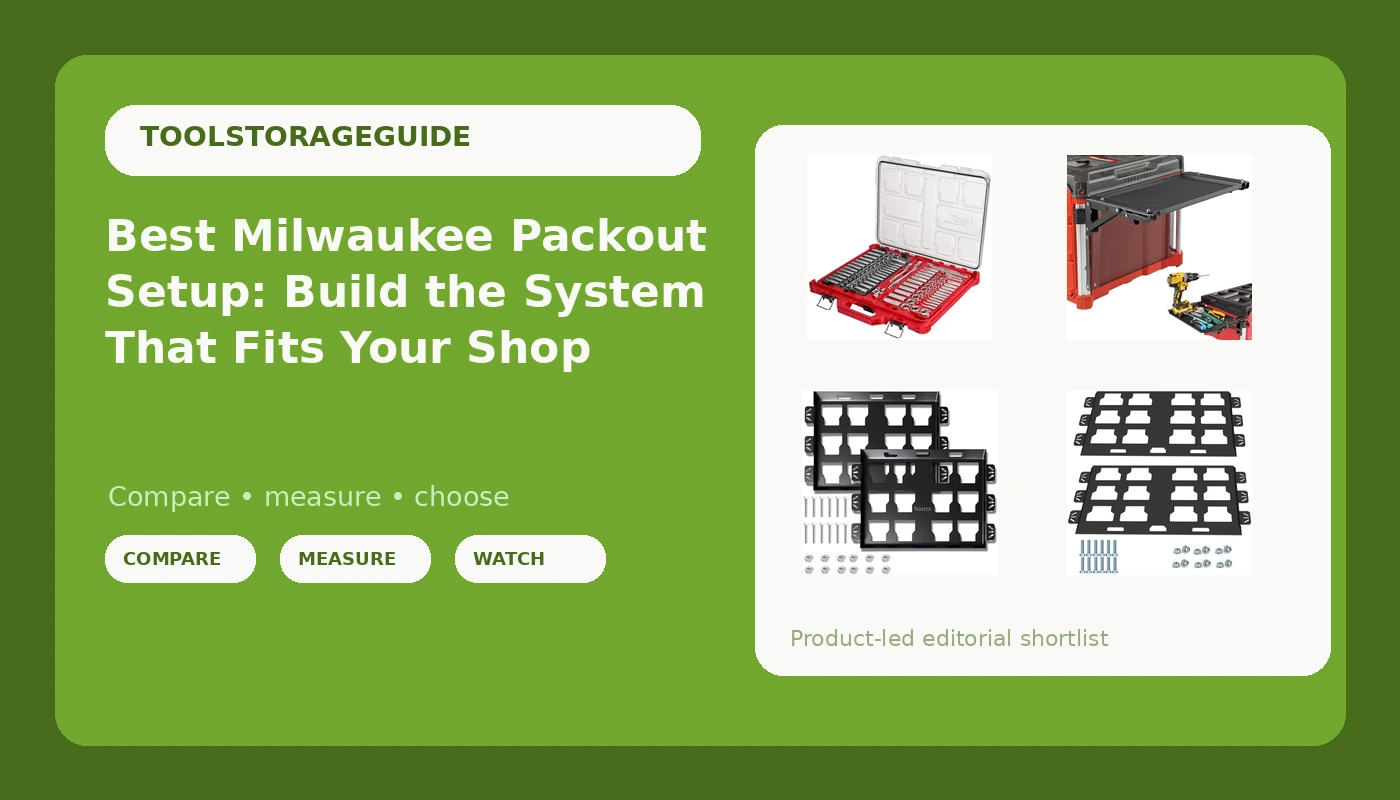
Milwaukee Electric - 1/4-3/8 106PC Rat. and Socket Set in PKOUT SAE-MM
Best-in-class latch mechanism, true modular stacking, huge accessory ecosystem
Visit on Amazon →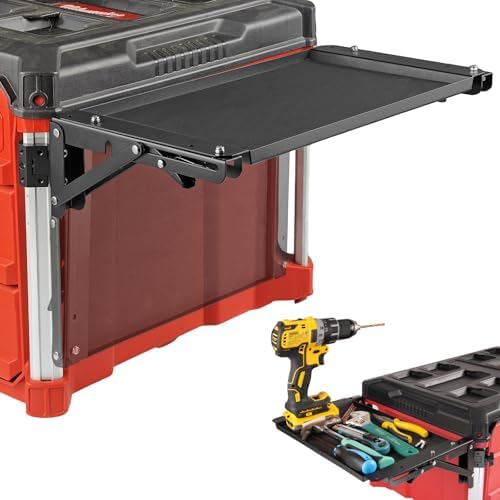
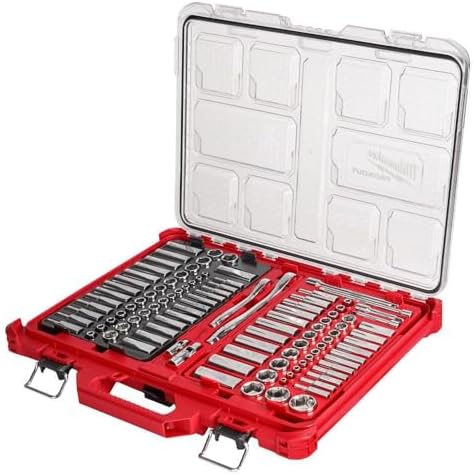
Folding Magnetic Side Table Compatible with Milwaukee Packout Toolbox, No-Drill Packout Accessories & Organizer with Magnetic Tool Tray
Adds a work surface to any Packout stack, magnets hold fasteners
Visit on Amazon →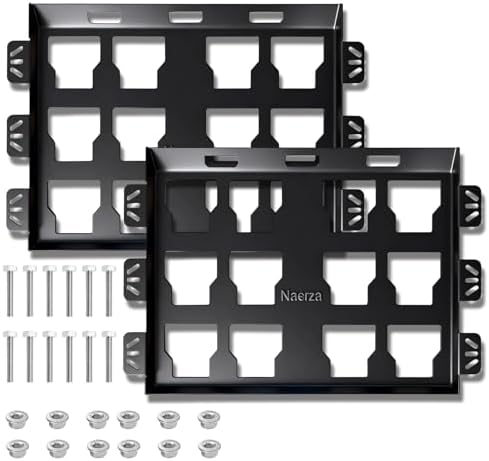
Mounting Plate Compatible with Milwaukee Packout 48-22-8486- Packout Accessories for Milwaukee Packout Tool Storage Setup and System Organization 100 Lbs Load Capacity 2 Pack
Clean way to mount Packout plates on walls or in vans
Visit on Amazon →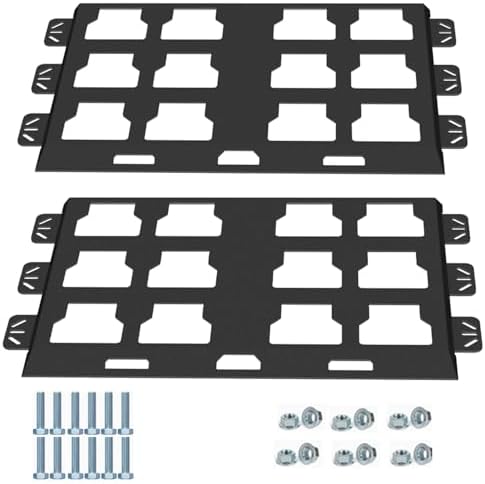
Mounting Plate Compatible with Milwaukee Packout, Full Plate-Black-2
More coverage than the half plate, holds heavier items
Visit on Amazon →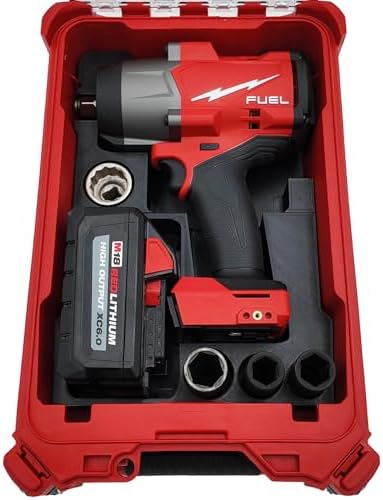
Organizer for M18 Fuel High Torque Impact Drill (Model 2967) for Milwaukee Packout Compact Organizer- Model 48-22-8435- LINER ONLY
Custom foam keeps your 2967 impact and batteries organized
Visit on Amazon →Design
The Packout system's design is the reason it owns the job-site market. The interlocking latches are genuinely overbuilt. I've stacked a rolling chest, a three-drawer unit, and a half-width organizer, loaded the whole thing with roughly 80 lbs of tools, and rolled it across a gravel driveway without a single latch popping.
That's not marketing. That's the latch mechanism doing exactly what it's supposed to do.
The base plate on the rolling chest is where the design starts to show its limits. The casters are fine on smooth concrete but they're not built for rough terrain. I've seen the front casters lock up on extension cords and uneven garage floors, same problem I've had with the US General casters. If you're rolling this thing across job sites with any regularity, plan on upgrading the wheels.
The drawer units use a ball-bearing slide that's smooth when new, but the slides are the weak point for heavy static loads. The drawers are rated for 50 lbs each and that rating is optimistic fiction, same as every other box I've tested.
I've got a three-drawer unit in my truck with a mix of hand tools and a couple of impact drivers, and after eight months the bottom drawer has a noticeable sag in the middle.
Not catastrophic, but it's there.
The plastic construction is the other design compromise. The Packout boxes are made from a thick polypropylene that handles drops and weather well, but it's not steel. You can't lean on a Packout drawer like you can on a US General. The plastic flexes under load, which is fine for moving tools but a problem for static storage.
Performance
The Packout system performs best as a mobile tool storage solution. I've run mine out of my truck for two years now, and the ability to grab a stack of boxes and carry them into a job site in one trip is genuinely useful. The handles are comfortable even with 60 lbs in a box, and the stack stays together when you're carrying it.
The rolling chest with drawers is the closest thing to a traditional toolbox in the system, and it's where the performance gap shows. The drawers are shallow, the slides are adequate but not butter-smooth like my US General, and the 50 lb per drawer rating is generous.
I loaded the bottom drawer with a full set of 1/2" drive sockets, a breaker bar, and a torque wrench, which is maybe 45 lbs, and the drawer started complaining within six months.
The top compartment on the rolling chest is where the Packout shines. It's deep enough for a drill, an impact driver, and a battery charger, and the lid latches securely. I've had the whole stack tipped over in the back of my truck during a hard stop and nothing opened. That's the Packout at its best.
The mounting plates (B0GXTGT49K and) are simple accessories that work as advertised. I've got a full plate mounted on the wall of my garage for the half-width organizers I use for drill bits and fasteners. At ~$35 to ~$40, they're not cheap for a piece of plastic, but they solve a real problem if you want your Packout stuff off the floor.
The folding magnetic side table at ~$59.99 is a clever accessory I didn't expect to use as much as I do. The magnets hold screws and small parts while you're working, and the table gives you a clean surface on a job site. It's not a workbench, but it beats setting your drill on a dirty floor.
The M18 impact organizer at ~$49.99 is the most niche piece I've tested. It's custom-cut foam for the Model 2967 impact and a couple of batteries. If you own that specific tool, it's a great way to keep it protected in a Packout box. If you don't own a 2967, it's useless.
Durability
The plastic Packout boxes are durable in the ways that matter for job-site work. I've dropped a loaded three-drawer unit off the tailgate of my truck onto concrete, and it bounced. The latches took the impact without breaking, and the drawers still function. That's the durability story for Packout: it survives the abuse of moving.
The durability problem is the drawers under static load. The plastic drawer slides and the drawer bottoms are not built for sustained heavy weight. I've seen the same complaint pattern from other owners. One guy on a forum said his bottom drawer developed a permanent bow after a year of holding a full socket set. That matches my experience at eight months.
The casters on the rolling chest are the other weak point. They're plastic with a rubber coating, and they don't handle rough terrain well. I've had one lock up on a gravel driveway, and I've read about owners replacing them with heavier-duty casters from Amazon. It's a ~$30 fix, but it's a fix you shouldn't have to make on a ~$300 rolling chest.
The paint and finish question doesn't apply here because there is no paint. The plastic doesn't chip or rust, which is a genuine advantage over the cheap steel boxes like the Husky 52" at ~$598 that chips if you look at it wrong. The plastic scuffs and scratches, but it doesn't corrode.
Value
Here's the honest math on Packout value. The rolling chest at ~$249 to ~$349 is a decent deal if you're building a mobile setup. The modular system means you can add pieces as your needs grow, and the resale value is strong because the system is so popular. I've seen used Packout pieces sell for 70% of retail on Facebook Marketplace.
The problem is the price premium for the name. A comparable modular system from DeWalt or Rigid runs 20-30% cheaper, and the Milwaukee logo is a real cost. The accessories are where the premium really shows. A mounting plate at ~$35 for a piece of injection-molded plastic is hard to justify until you've used it for a year and realize it's the only thing that works with the system.
At ~$59.99, the folding magnetic side table is overpriced for what it is, but it's the only one that fits the Packout system. That's the lock-in effect. Once you own the rolling chest and a couple of boxes, you're committed to the accessory prices.
The best value in the system is the half-width organizer at around ~$40. It's the piece I reach for most, it holds a surprising amount of fasteners and small parts, and it stacks perfectly with the rest of the system. If you're starting a Packout setup, that's where I'd begin.
Should you buy it?
If you're a job-site worker who needs to move tools between locations, yes. The Packout system is the best modular storage I've used, and the latching mechanism alone is worth the premium over the competition.
If you're a home garage mechanic looking for a static toolbox, no. You'll get more box for the money with a US General 44" on sale at ~$399, and the steel construction will hold up better under heavy drawers.
The hybrid approach is what I run: Packout for the truck and job-site work, US General for the static shop. The two systems serve different purposes, and trying to make one do both jobs ends in frustration. The Packout drawers sag under heavy static loads, and the US General doesn't roll up stairs.
I'm currently testing whether the newer Packout drawer units with the redesigned slides hold up better under load than the first generation. The design changes are subtle, but the slide mechanism looks beefier. I'll update this when I've got more time on them.
Last updated: February 2025. I've been running the Packout system for two years and will keep updating this as the components age.