Related: Socket Trays vs Magnetic Rails: Which One Keeps a Drawer Tidy
Every socket organizer tray set I have bought started with the same promise: this is the thing that finally makes the drawer make sense. Most of them lied. The trays that come bundled with a cheap kit are sized for whatever sockets that kit maker had on the shelf, and the minute you add a deep 3/8 or a stubby 1/2, the layout falls apart. What actually works is a set that covers the drives you own, sized so the sockets stand up and you can read the numbers without lifting anything out of the way.
This is not a toolbox review. It is a look at four pieces of storage that do four different jobs in the same shop: the socket trays that hold your most-used sizes, a rolling box for the tools that never live in a chest, a small-parts organizer that stops the loose stuff from migrating, and the one bottle most people never buy until their air tools start spitting rust.
I have spent 16 years as a diesel mechanic, and I have organized storage for myself, for the guys I work with, and for every friend who bought a starter set and then wondered why the drawer was a disaster six months later. Here is what I think of each of these, and where each one belongs.
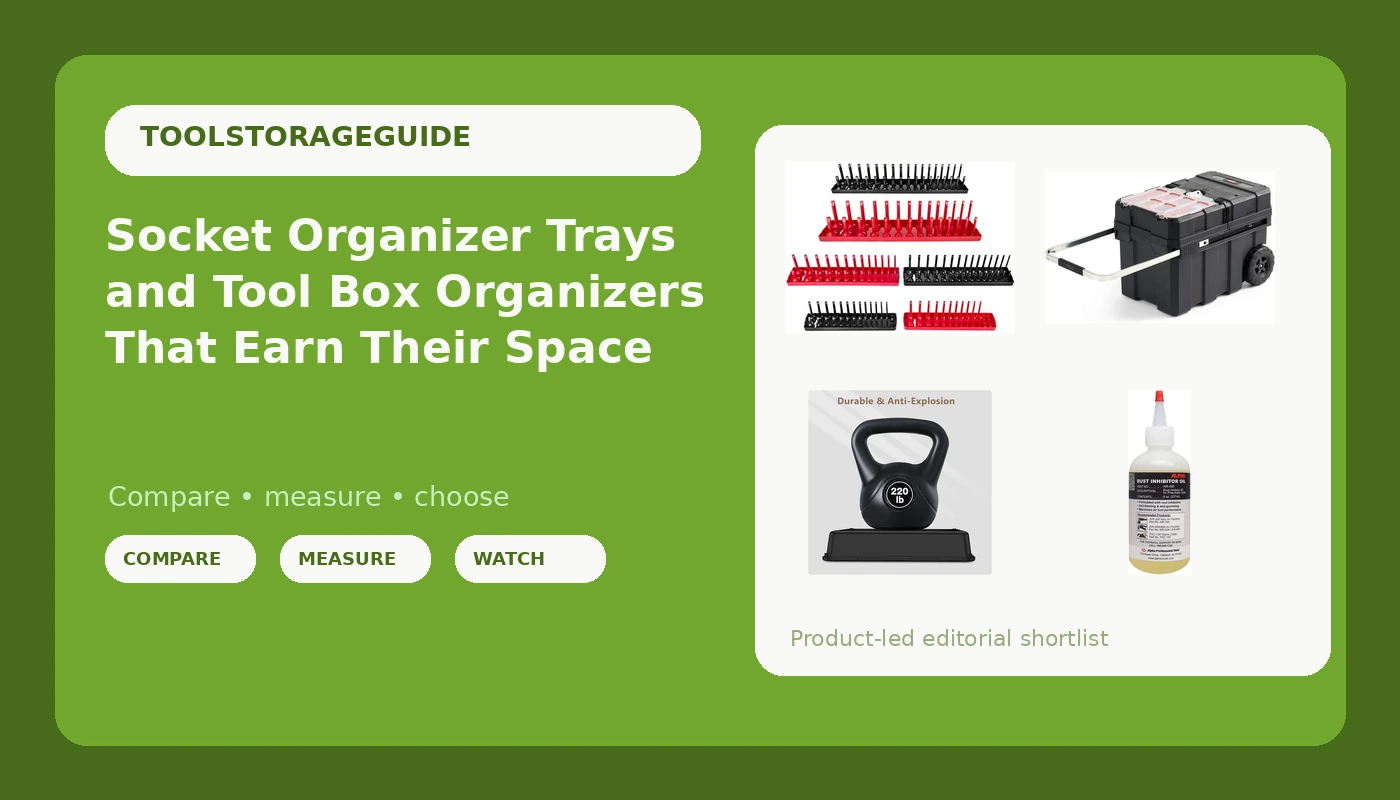
Best Overall: AIUITIO 6PCS Socket Organizer Tray Set
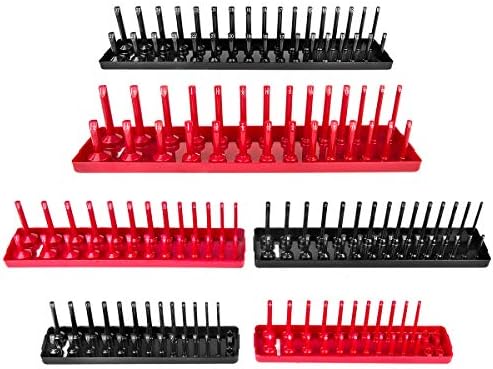
This is the piece I would buy first, and it solves the actual problem. Six trays, red for SAE and black for metric, covering 1/4-inch, 3/8-inch, and 1/2-inch drive in both deep and shallow. That is the full spread most home mechanics end up owning, and the color split means you stop hunting for a 10mm in the wrong tray.
Why trays matter more than people give them credit for: a socket that is standing up is a socket you can grab without looking. A socket lying on its side in a pile is a socket you dig for, and digging is how the 10mm disappears. When the tray is right, putting the tool back takes less effort than leaving it out. That is the entire game with storage.
Two honest notes. Trays like this are only as good as the drawer they sit in. If your drawer is deeper than the tray is tall, deep sockets will lean. If the drawer runs on friction slides and jerks every time you open it, everything shifts and you will be re-seating sockets every week. Put these in a drawer with a real ball-bearing slide and they stay put.
The other thing: these trays do not care what brand your sockets are, but they do care about the sizes you actually own. Count your drives before you buy. If you are a 3/8-only person, half this set will sit empty. If you are like most of us, you have all three drives and a pile of strays, and this is the cheapest way to turn that pile into something usable.
Best for Tools That Leave the Shop: Keter Masterloader Resin Rolling Tool Box
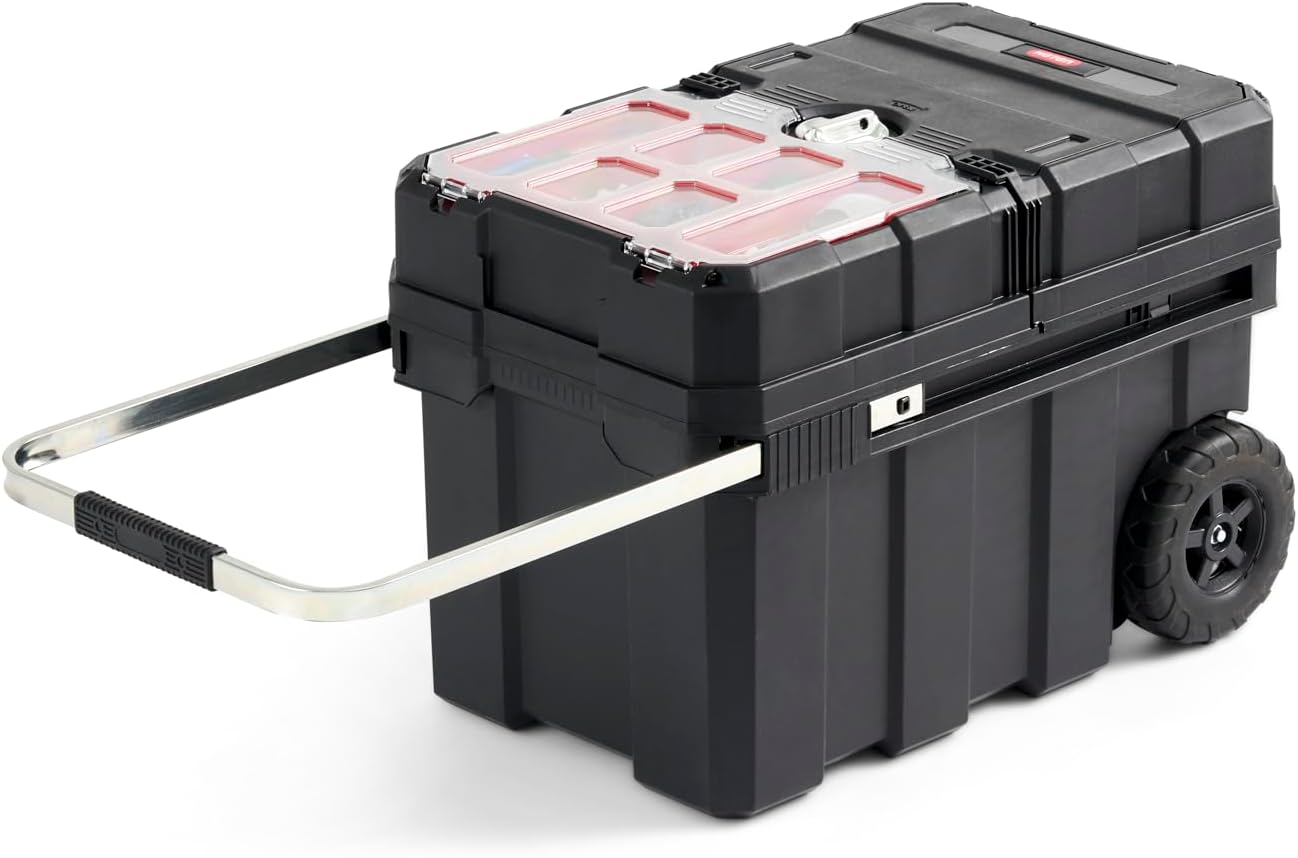
I will be straight with you, because I have said this about Keter before: resin is not steel, and this is not a chest replacement. If you are looking for something to hold a full set of wrenches in a shop where drawers get slammed all day, keep looking. This is a different tool for a different job.
What it is good at is moving. The Masterloader rolls, the locking system keeps the lid down while it is rolling, and the removable bins let you pull a whole tray of small parts out and carry it to the work. For a power drill, a tape measure, and a screwdriver set headed out to a job, this is exactly the right shape and weight. It is light enough that you are not fighting it up a step, and it rolls under a bench when it is not in use.
The compromise is the material. Resin flexes where steel does not, and it does not love a hot truck bed or a heavy load spread unevenly. Treat it as light-duty mobile storage and it will do its job for years. Treat it as the bottom half of a tool chest and you will be disappointed. I keep mine for the stuff that travels and leave the heavy work to steel.
Best for Loose Hardware and Small Parts: A-LuGei Tool Box Organizer
Here is the piece that fixes the problem you did not know you had. Socket trays handle sockets. They do not handle the hex bits, the spare fuses, the hose clamps, the cotter pins, and the four random bolts that live in the corner of every drawer. That is where a dedicated organizer earns its spot.
The point of a small-parts organizer is containment. Once the loose stuff has a home, it stops migrating into the socket trays and it stops ending up under the bench. You also stop buying a third 10mm because you cannot find the two you already own. That is not a small thing. The cost of disorganization in a shop is measured in duplicate tools and wasted minutes, and it adds up faster than any of us like to admit.
A word on fit. An organizer like this is worth having only if it fits the space you have. Measure the drawer or shelf before it shows up, because a great organizer that does not fit is just a box on the floor. I like this one in a shallow drawer near the bench, where the small stuff gets used most.
The Bottle Nobody Buys Until It Is Too Late: Alpha Rust Inhibitor Air Tool Oil
This is the least exciting item on this list and the one that saves the most money. Air tools rust from the inside, and they rust quietly. You do not notice until the impact starts running weak or the trigger gets sticky, and by then you are shopping for a replacement instead of a bottle.
Air tool oil belongs in the same category as drawer liners and good casters: cheap insurance on gear that costs real money. A few drops in the inlet before you hang the tool up, and the internals stay protected between jobs. The rust inhibitor part matters more than people think in a garage that swings between humid summers and cold winters, which describes most of the country.
Storage is not only about where tools sit. It is about what shape they are in when you reach for them. An eight-ounce bottle takes up almost no shelf space and keeps the tools you already paid for working. If you have air tools and no oil, you have a gap in your setup.
How I judge storage like this
I do not care what the box says on the front. I care about four things, and I check them in the same order every time.
First, does it survive daily use? A socket tray that pops loose the third time you open the drawer is worse than no tray at all, because now you are re-seating sockets and losing time. Second, does it hold its shape under load? A small-parts organizer that bows when you fill it will dump its contents into the drawer the first time you yank it open.
Third, does it fit where it needs to go? This is the one people skip, and it is the one that decides whether a purchase works. Fourth, does putting the tool away take less effort than leaving it out? If the answer is no, the storage will fail within a month, no matter how good the materials are. That last test is the real one. Every organizer I have ever kept passed it. Every one I have thrown out failed it.
What these four pieces actually do together
Think of it as layers. The socket trays handle the sockets, which are the heaviest and most-used part of any mechanic's drawer. The A-LuGei organizer handles everything that is not a socket, which is the category that quietly destroys otherwise good drawer layouts. The Keter box handles the tools that travel, so the chest does not have to. The air tool oil handles the tools after the work is done.
That is a complete loop, and it is a cheap one. None of it requires a new chest or a new bench. The most common mistake I see is someone buying a bigger box to solve a layout problem. A bigger box with the same bad layout just gives you a bigger mess, and it costs ten times as much as a set of trays.
There is also a sequence here. Trays first, because they deliver the biggest change in daily use. Small-parts containment second, because it protects the trays. Mobile storage third, if you actually move tools. Maintenance last, and honestly it should be first, because it is the cheapest.
The reference table
| Product | Job in the setup | Where it goes | Notes |
|---|---|---|---|
 Visit on Amazon → Visit on Amazon →AIUITIO 6PCS Socket Organizer Tray Set |
Holds 1/4-inch, 3/8-inch, and 1/2-inch drive deep and shallow sockets | Top drawer, next to the ratchets | Red for SAE, black for metric |
 Visit on Amazon → Visit on Amazon →A-LuGei Tool Box Organizer |
Contains loose hardware, bits, and small parts | Shallow drawer or shelf near the bench | Keeps strays out of the socket trays |
 Visit on Amazon → Visit on Amazon →Keter Masterloader Resin Rolling Tool Box |
Carries the tools that leave the shop | Rolls on the floor, parks under the bench | Resin, light duty, not a chest replacement |
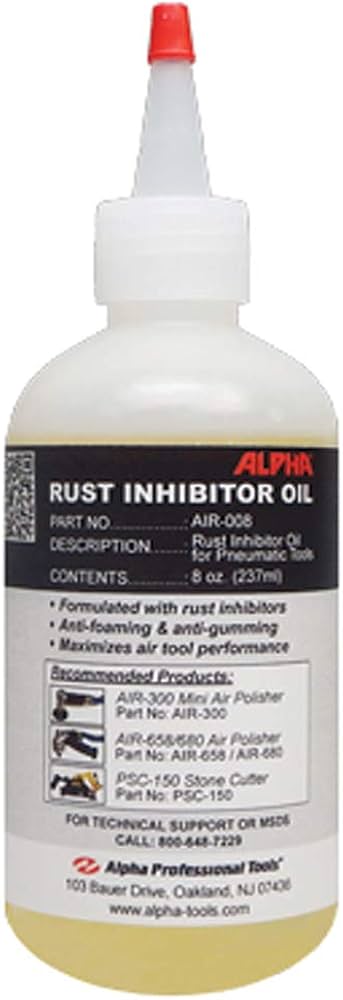 Visit on Amazon → Visit on Amazon →Alpha Rust Inhibitor Air Tool Oil |
Keeps air tools from rusting between jobs | Shelf beside the air tools | Maintenance item most people skip |
A note on trays and drawer slides
Everything in this table depends on one thing you cannot buy in a kit: a drawer that opens smoothly. Trays, bins, and organizers all assume the drawer stays level when it moves. Friction slides do not. They bind, they jerk, and they get worse every year. If you are fighting your drawer every time you open it, fix that before you spend another dollar on trays. The storage is only as good as the slide underneath it.
A note on resin versus steel
Resin has a place. It does not dent, it does not rust, it does not scratch a truck bed, and it weighs a fraction of what a steel box weighs. For a box that travels, that is a real advantage. What resin does not do is hold a heavy load spread unevenly across a wide drawer without flexing. Know which one you are buying. If the box lives in one spot and gets loaded hard, steel. If it rolls out to a job and back, resin is fine.
Should you buy the AIUITIO socket organizer tray set?
Yes, if you own sockets in more than one drive size. Six trays cover 1/4-inch, 3/8-inch, and 1/2-inch drive in both deep and shallow, and the red and black split keeps SAE and metric from mixing. It is the cheapest way to turn a pile of loose sockets into a drawer you can read at a glance, and it is the single biggest daily improvement you can make for the money.
The catch is the drawer. Put these in a box with real ball-bearing slides and they hold their place. Put them in a jerky friction-slide drawer and you will re-seat sockets every week. Fix the slide, then buy the trays. In that order.
Should you buy the Keter Masterloader Resin Rolling Tool Box?
Buy it as a mobile cart for the tools that leave the shop, not as a replacement for a steel chest. The removable bins and the locking system make it genuinely useful for hauling a drill, a tape measure, and a screwdriver set to a job, and it rolls where you need it. It is the right shape for that work.
Just respect the material. Resin is light-duty storage. I would not load it the way I load a steel box, and I would not leave it in a hot truck bed for a season. Use it for what it is and it will last. Use it as a chest and you will be shopping again in a year.
Should you buy the A-LuGei organizer and the air tool oil?
Both, and neither is glamorous. The organizer stops the loose hardware from migrating into your socket trays, which is the quiet reason most drawer layouts fall apart. The air tool oil keeps the tools you already own from rusting from the inside, which is the quiet reason people replace impact guns they did not need to replace.
Measure your drawer before the organizer shows up. Add a few drops of oil before you hang the tool up. Two small habits, and they protect everything else in the setup.